
Figure 1
“Friday 12th March 1943: We see some great planes flying about here. The Liberators are very thick and popular, but the plane that creates most attention is the P-38, a Lockheed production. It has twin engines and tails, with a small cockpit between the two motors. They seem to no sooner come in to sight then they disappear again. Extremely fast, but I can’t know how they would compare with our famous Spitfires.” (Harry Stone: Diary No. 1, New Caledonia).
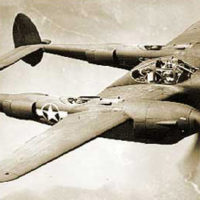
The revolutionary Lockheed P-38 Lightning (Figure 1) was an iconic plane in WW2, and especially in the Pacific War. Although it was not flown by New Zealand airman, it was used extensively in the Pacific and most Kiwi’s were familiar with its distinctive shape. A squadron of P-38’s was based at the Stirling Island airfield right next to Harry Stone’s anti-tank gun emplacement. It was the largest, heaviest and fastest fighter plane of its time.
Designed by Clarence “Kelly” Johnstone’s design team called the “Skunk Works” in Burbank California in 1937, the prototype flew on January 27, 1939. The design was Lockheed’s response to a request by the United States Army Air Force (USAAF) for a high performance interceptor. The prototype set a speed record in February 1939 by flying across the United States from California to New York in 7 hours and 2 minutes. Full production of the plane began at Lockheed’s Burbank plant in September 1940. In one of its final versions the P-38J was capable of speeds of 420 (675 km) miles per hour at 25,000 feet (7620 m).
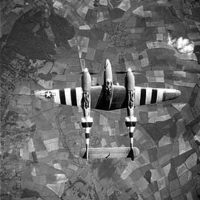
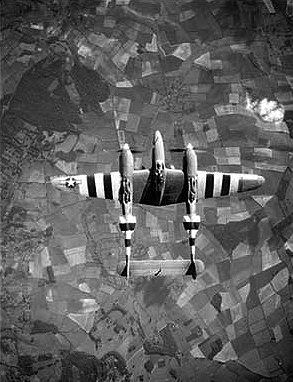
The early versions of the aircraft suffered from problems which included “tail flutter” and “compressibility stall” when diving from high altitudes at speeds approaching the speed of sound, during which the controls would lock up. The plane’s problems were gradually overcome by Lockheed, but one persisted: the cockpit was very cold in freezing conditions. This made the P-38 less suitable for conditions in the War in Europe. Nevertheless it was a very effective fighting machine in the European theatre and remained operational there until the end of the war, although gradually replaced by the P-51 Mustang and P-47 Thunderbolt from 1944. The Germans called the P-38 the Gabelschwanzteufel, the “fork tailed devil”. The aircraft in Figure 3 displays the D Day invasion stripes that made identification of Allied plane easier.
-
- Figure 2

-
- Figure 3
-
- Figure 4

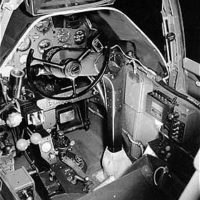
The opposite heating problem occurred in the tropics, with the P-38 cockpit (Figure 4) prone to overheating. While this problem mostly occurred at low altitudes, severe wind buffeting prevented the pilot from opening the canopy for relief from the heat.
Apart from its outstanding performance, (in its final version it could out-turn a Japanese Zero) the main advantage of the Lightning in the Pacific was its long range, which could be extended further by drop-tanks under the wings. This feature was particularly suitable to the long ocean distances that were a feature of the War in the Pacific. Having two engines also meant that if one malfunctioned or was shot out over the ocean, there was a greater chance of the pilot returning to base. This feature saved many American pilots lives in the Pacific.
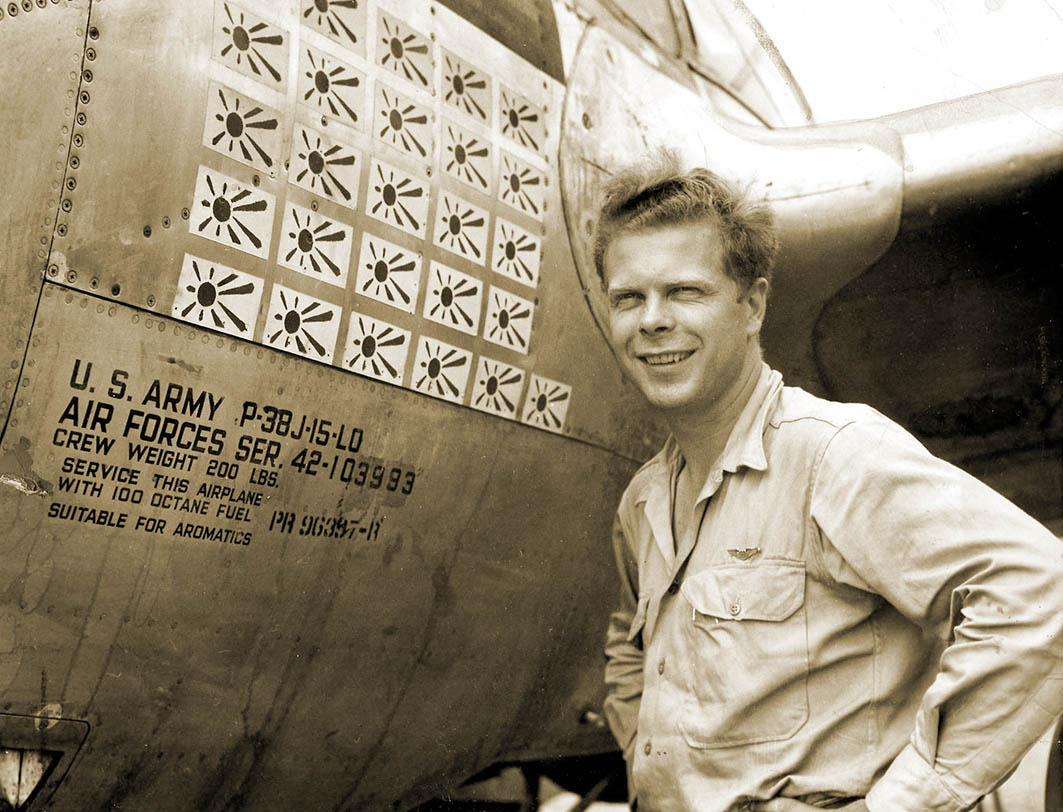
The photograph in Figure 5, taken in 1944, shows pilot Richard Bong from Wisconsin standing next to his P-38 “Marge”, named after his girlfriend and later wife, in which he was credited with shooting down 40 Japanese planes to make him America’s top ace in WW2.
On April 18, 1943 the extended range of the P-38 enabled a squadron of eighteen planes taking off from Fighter 2 Airfield near Henderson Field on Guadalcanal to fly to Bougainville Island, where intelligence had established that Admiral Yamamoto, the man who planned the attack on Pearl Harbour would be visiting Japanese air units to boost flagging morale.
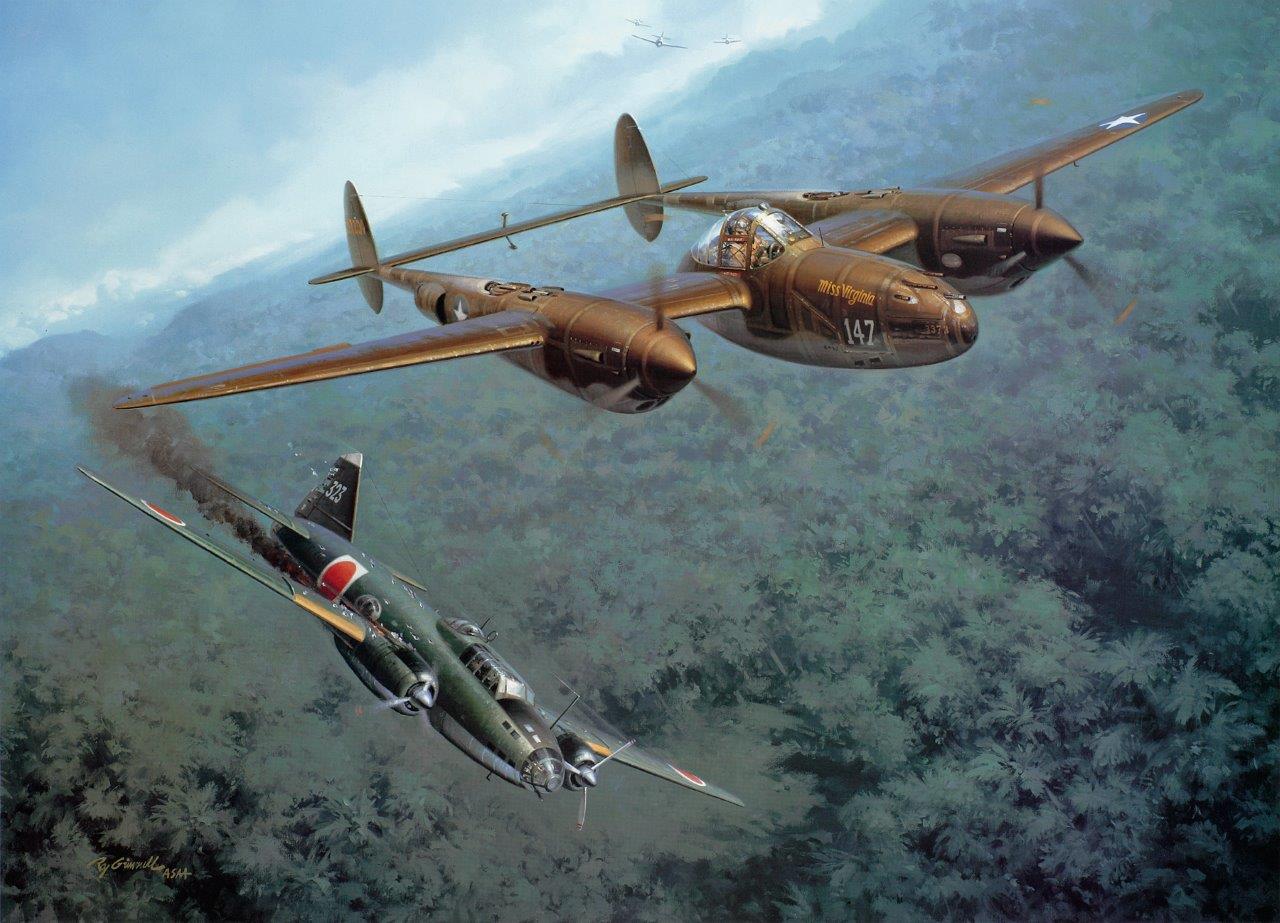
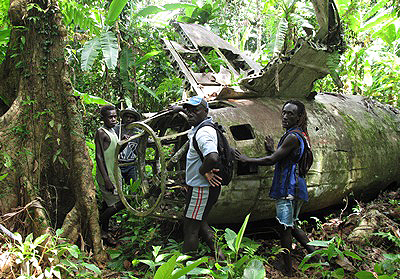
The P-38’s intercepted Yamamoto’s bomber transport and shot it down, (Figure 6), killing Yamamoto and returning safely to Guadalcanal. The mission involved a round trip of 1,600 km. The assassination of the man responsible for the humiliation of Pearl Harbour was in turn a huge moral booster for the Americans, although ironically the success of the mission could not be made public for fear of alerting the Japanese to the fact that their code system had been broken. The remains of Yamamoto’s Betty bomber can still be seen in the jungle of Bougainville (Figure 7). The Japanese fighter ace Saburo Sakai commented after the war that the P-38 Lightning fighters “destroyed the morale of the Zero fighter pilot.”
-
- Figure 5
-
- Figure 6
-
- Figure 7
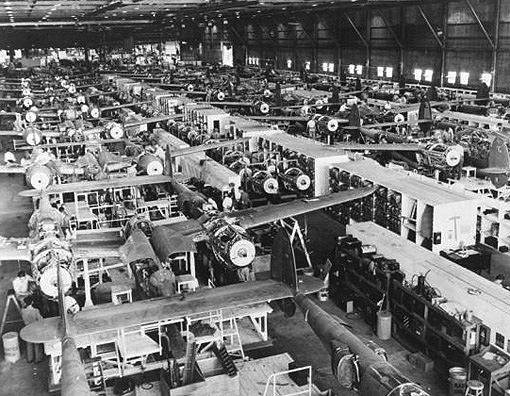
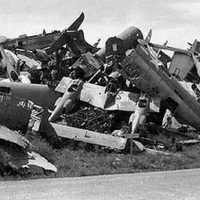
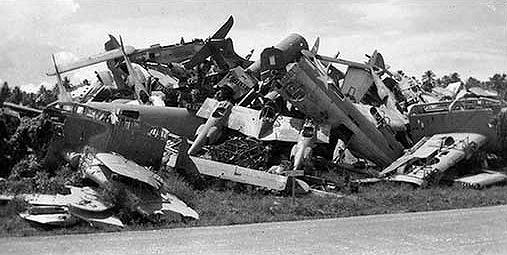
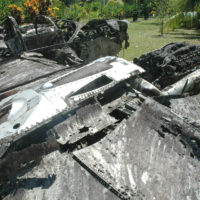
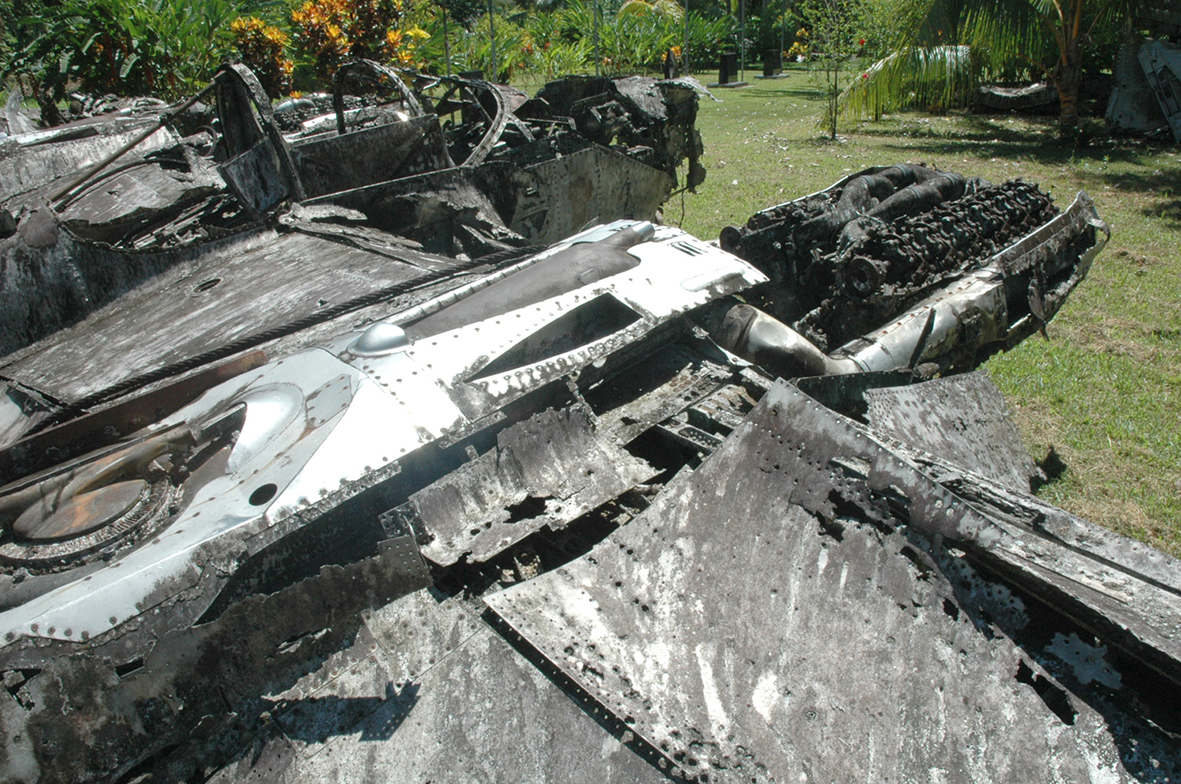
The Lightning was manufactured throughout the war and approximately 10,000 were made (Figure 8). It shot down more Japanese planes than any other American plane in World War 2. Of course, not all of them survived the war: several P-38’s can be seen in this photograph of aircraft wreckage taken in Guadalcanal (Figure 9). Today there are only three P-38’s flying, including “Glacier Girl” (Figure 1) which was reclaimed from the ice in Greenland, where it crash-landed in 1942 while flying to Britain, and fully restored. The sad remains of a P-38 can be seen at the open air museum at Vilu, west of Honiara on Guadalcanal (Figure 10).
-
- Figure 8
-
- Figure 9
-
- Figure 10
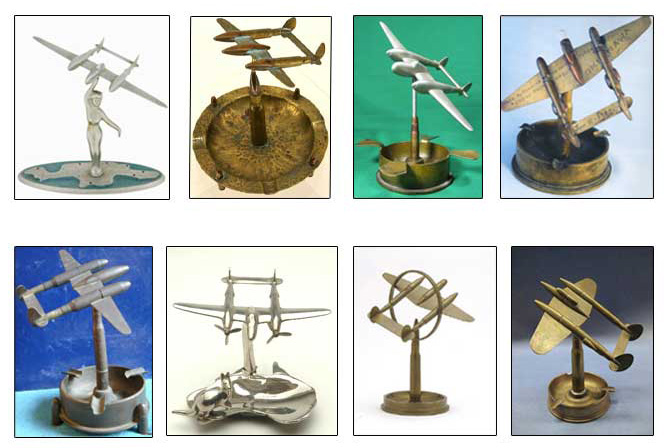
Because of its radical new shape as well as its reputation cutting edge aerial technology, the P-38 was very popular with war artists at every level, from the official war artist to the bored infantryman making models to take home, for trade, or for selling to his mates. It was particularly popular when it came to brass model making, because its three cylindrical sections could be represented with spent or “deloused” bullets, linked by wings fashioned from flattened out artillery casings. A selection of WW2 soldier-art models of the aircraft depicted in Figure 11 gives an indication of the wide variety of representations of the plane that were produced by servicemen during the war.
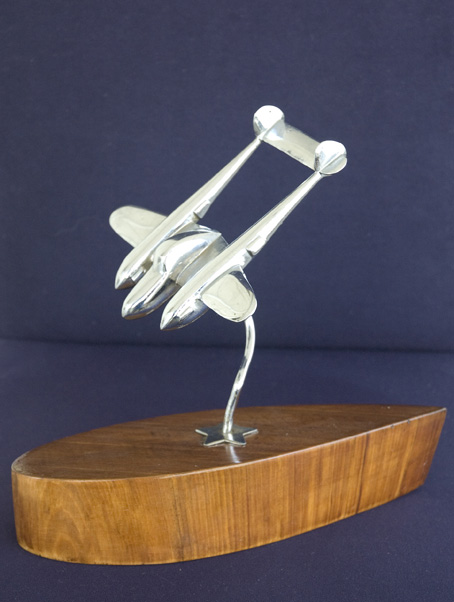
I photographed the beautiful model shown in Figure 12 at the RNZAF airfield in West Auckland while waiting to board the C130 flight to Guadalcanal in 2010. The model is mounted on a cross section cut from a P-38 propellor .
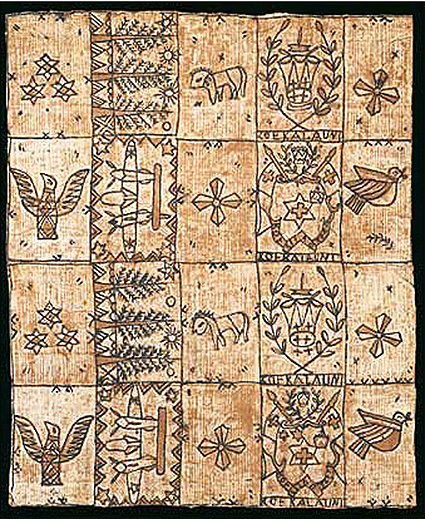
Figure 13 shows a 1944 tapa cloth from Samoa which includes a stylised Polynesian representation of a P-38. The inclusion of this example of what was cutting edge twentieth century aircraft design alongside more traditional motifs underlines the cultural impact the aircraft had made amongst the people of the Pacific. The historical events of the War in the Pacific had, within a few years, changed their lifestyle irrevocably.
-
- Figure 11
-
- Figure 12
-
- Figure 13
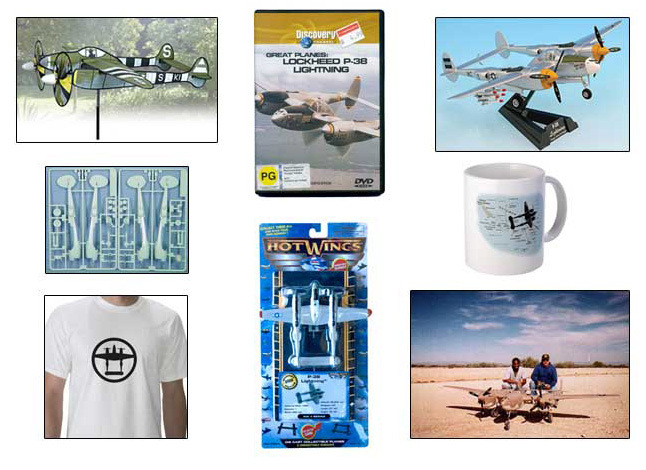
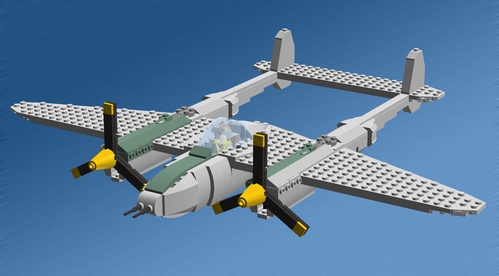
As Figure 14 shows, the design of the P-38 still creates interest and passion among model makers and collectors to this day. You can buy a Lego model of the plane (Figure 15). It even influenced at least one American car design in the post-war years: the 1959 Cadillac Cyclone concept car adopted the twin tail fins, bubble canopy and even the twin nose design references the propellor cones of the P-38 (Figure 16).
-
- Figure 14
-
- Figure 15
-
- Figure 16
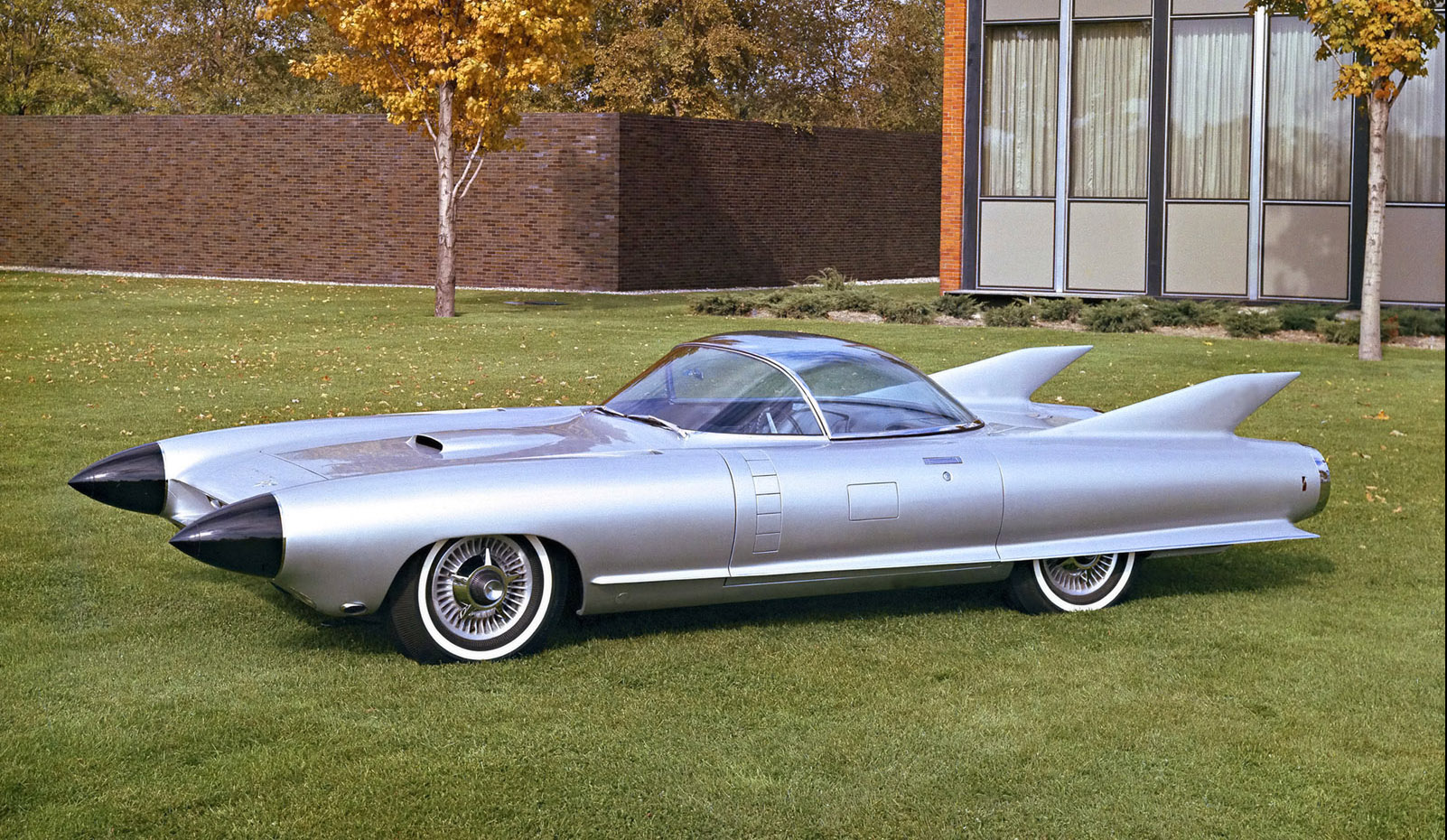
One writer has suggested that every American tail-finned automotive monster of the 1950s and 60s can be traced back to the twin boom design of this iconic aircraft.
“Friday 28th May 1943: A P-38 fighter plane flew down the valley at tree top height today, the air just screamed as it went by. We haven’t seen fast planes in New Zealand yet.” Harry Stone: Diary 1, New Caledonia.

Figure 17