
Figure 1
Allan Barns-Graham (1906 – 2006) was born in Gisborne on the east coast of the North Island. He was educated at Christ’s College, New Zealand and subsequently studied at the Glasgow School of Art. He spent three years studying painting at the Slade School of Art, London University, where he obtained a Diploma of Fine Arts. On his return to New Zealand, Barns-Graham worked as a professional portraitist in Auckland, developing skills which would later be put to good use in the New Zealand Army.
With the outbreak of World War II he tried to enlist in the 2nd New Zealand Division to serve in the Middle East. According to the National Archives War Art biography on Barns-Graham, he had difficulty being accepted into the army, being told that he was unsuitable because he was too old (he was in his thirties) and had a family. He persisted in applying however, and was eventually accepted into the 1st Battalion of the New Zealand Scottish Regiment, being sent to New Caledonia in 1942 as part of the 8th Brigade of the 3rd New Zealand Division.
The position of Official War Artist was posted as a competition while he was in New Caledonia and Barns-Graham applied. After initially being turned down, he was eventually accepted with the backing of several senior officers. Barns-Graham was sent to Vella Lavella and later the Green Islands campaign, where he documented the action with many sketches and drawings. He did not take part in the invasion of Mono Island.
After the war, Barns-Graham taught art at Gisborne Girls High School from 1950 until his retirement. He was instrumental in setting up the Tairawhiti Museum in Gisborne.
It is difficult to find any information on this painter, and there are not many photographs of him available. It was not until 1982 that the New Zealand National Archives acquired its collection of his works.
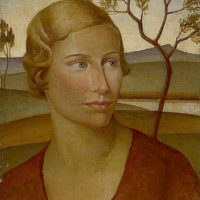
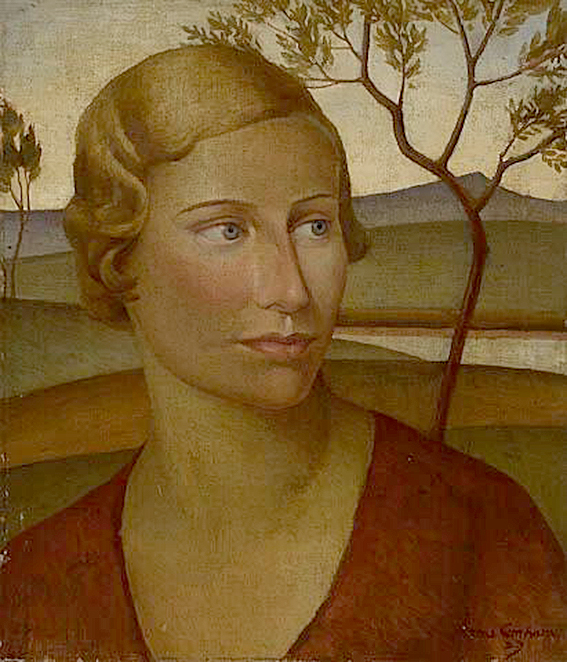
Of the three official New Zealand war artists, Barns-Graham was arguably the most gifted portraitist. His oil on canvas portrait “Win” (Figure 2), was painted in 1933. It is a strong portrait of a confident young woman with Classical-Renaissance overtones in its refined simplicity, even lighting and Da Vincian landscape in the background.
-
- Figure 2
-
- Figure 3
-
- Figure 4
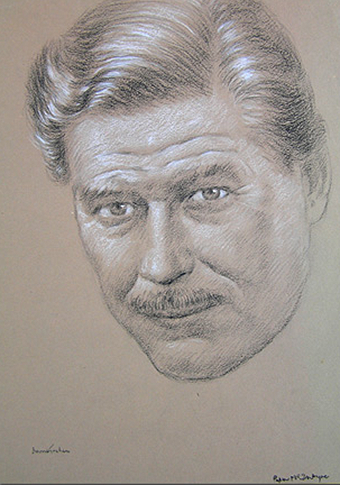
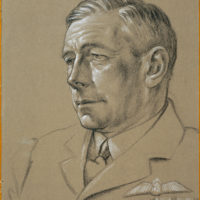
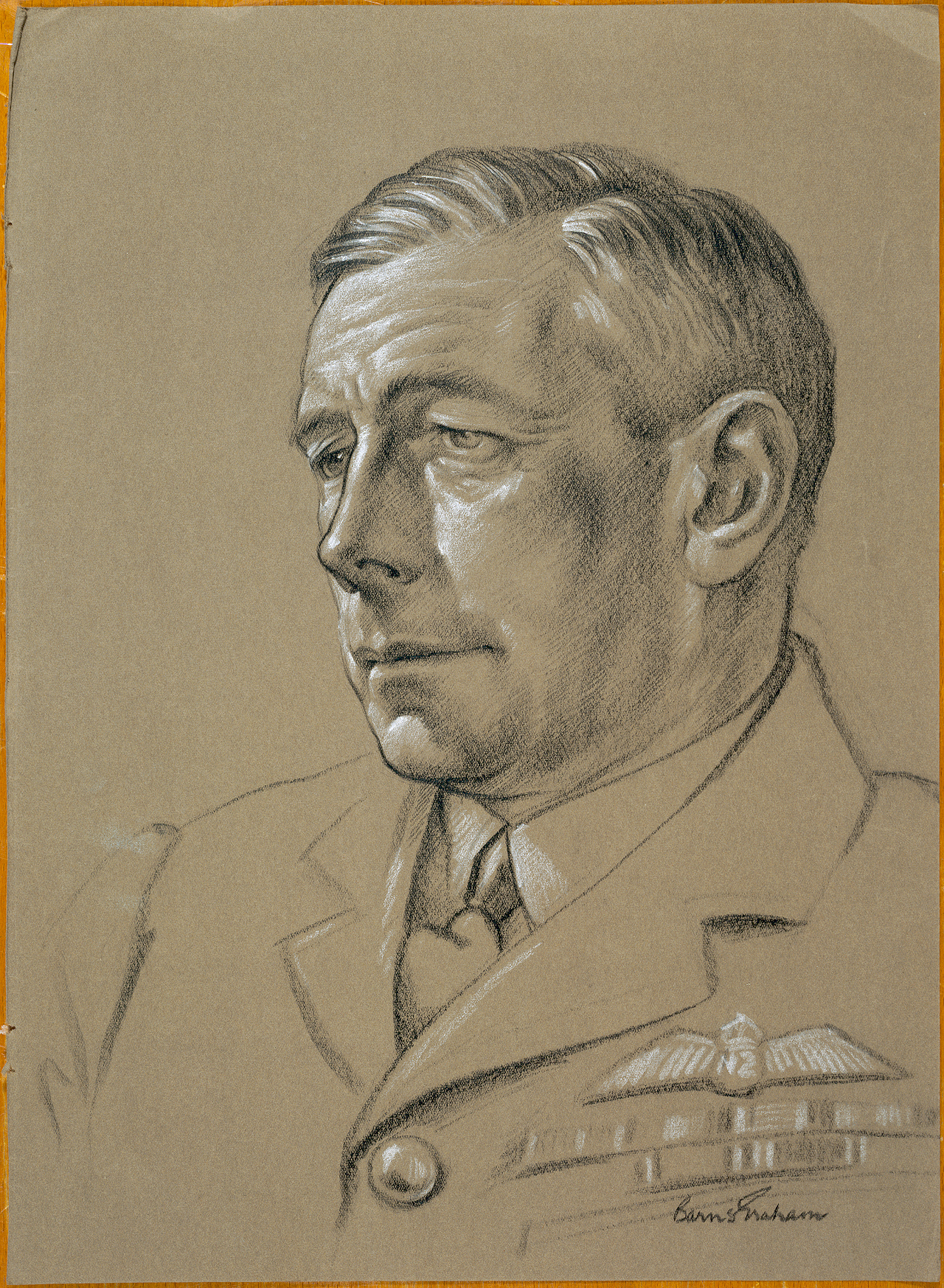
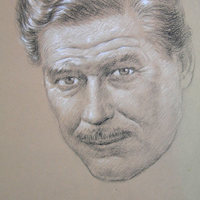
As official war artist Barns-Graham produced a significant number of official portraits of officers in pencil and conte pastel (also a popular medium with RNZAF official war artist Maurice Conly) and oil paint. His conte drawings included a portrait of Air Vice Marshal Leonard Isitt, who was to sign the surrender of Japan documents on the battleship Missouri on behalf of New Zealand in 1945 (Figure 3), and his friend and fellow Division 2 official war artist Peter McIntyre (Figure 4).
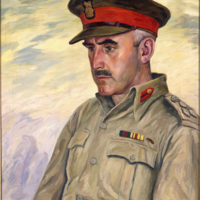
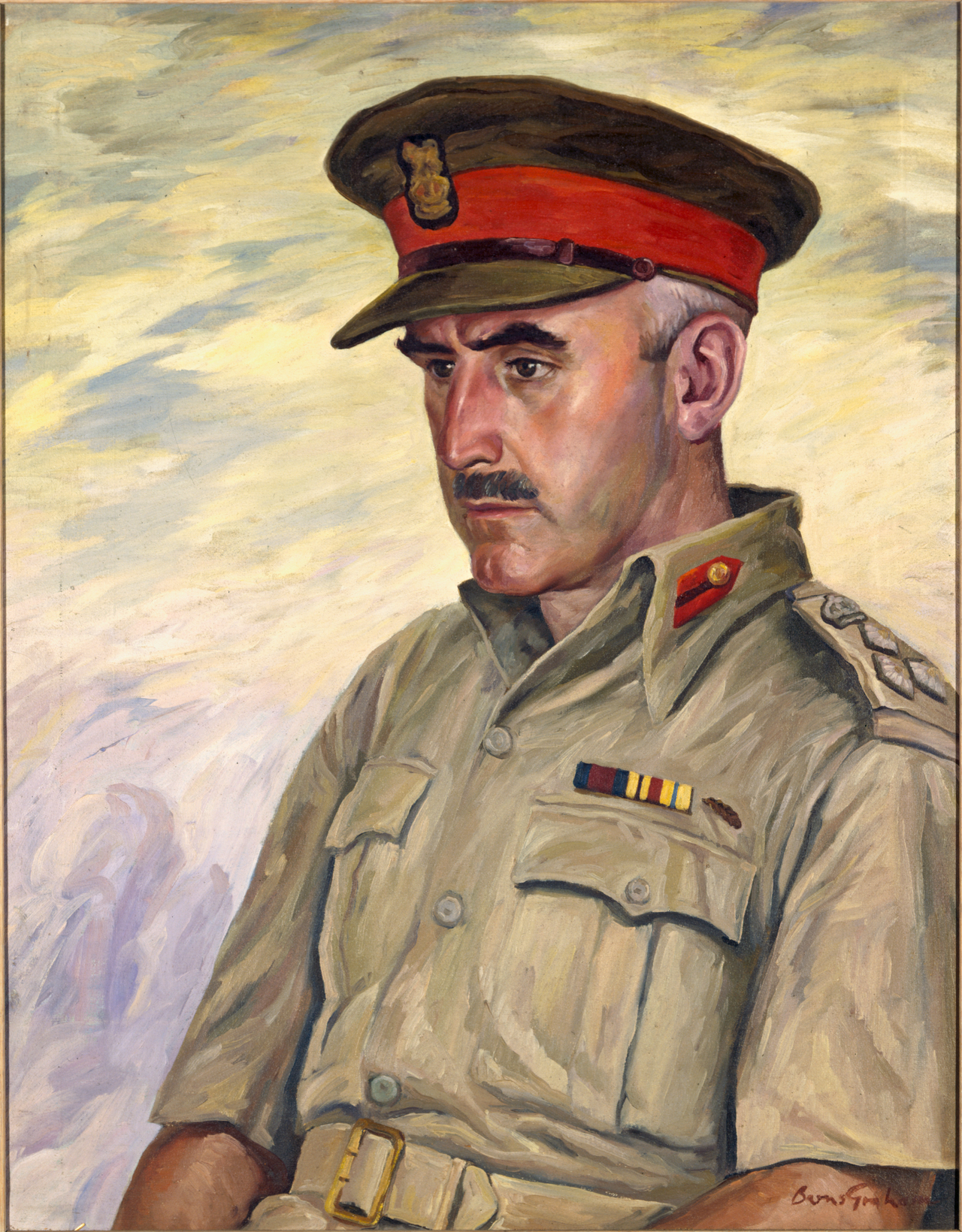
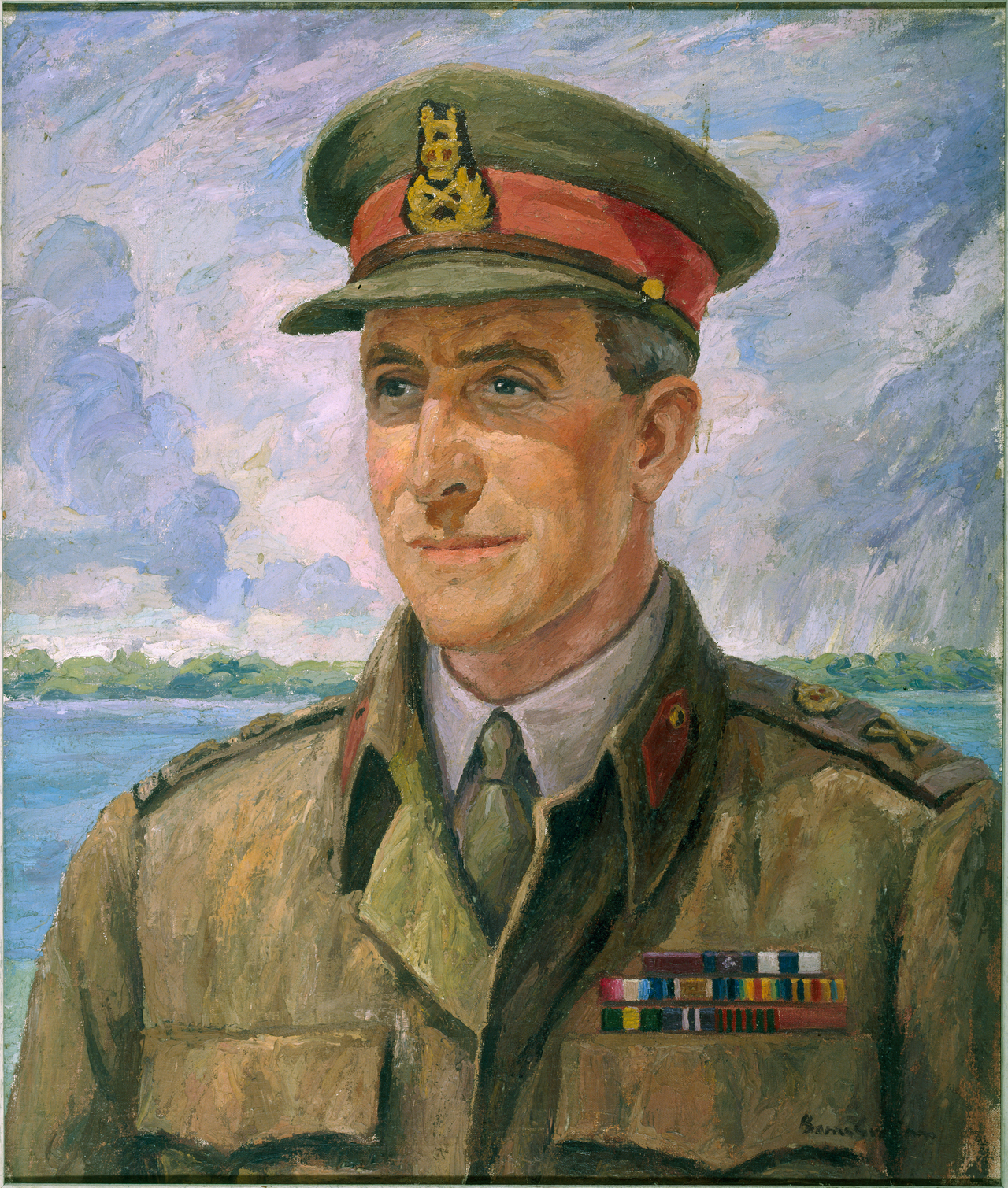
Barns-Graham was a gifted oil paint portraitist and his formal paintings of Brigadier Duff (Figure 5) and Major General Barrowclough (Figure 6) demonstrate his strong skills in that medium. Both portraits are three-quarter views of their subjects, who look out of frame to the left, but the brushwork is quite different in each. Duff is painted in a crisp, sharp-edged style, while the technique in the portrait of Barrowclough is looser and more impressionistic. Contrasting with this treatment, Duff is shown with his shirt collar open, while Barrowclough wears a necktie. The sketchy, atmospheric background in the Duff portrait contrasts with the island landscape shown behind Barrowclough, who was the commander of the New Zealand 3rd Division in the Pacific.
-
- Figure 5
-
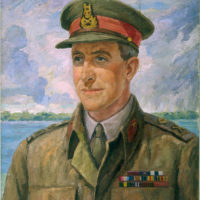
- Figure 6
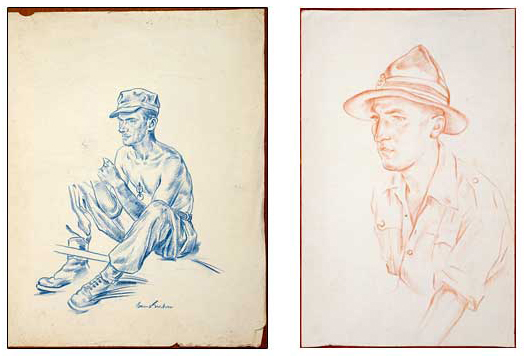
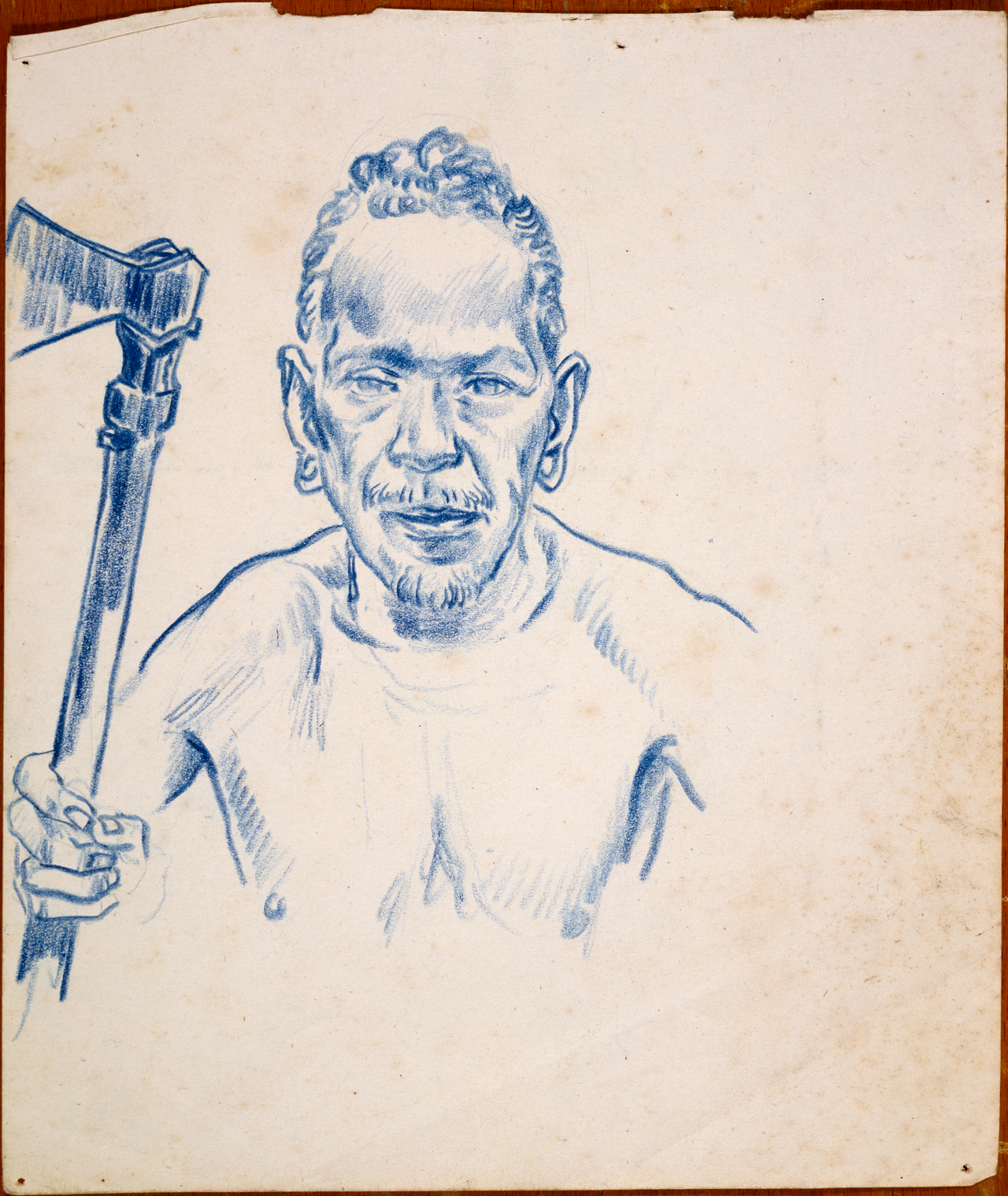
Barns-Graham’s portraits of ordinary soldiers in sepia and blue coloured pencil, most likely done on location in the islands, are sensitively and skillfully executed (Figure 7). He also produced studies of the native Melanesians, whom he represented with respect and sensitivity (Figure 8).
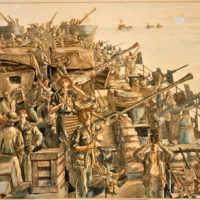
More than the other official artists, Barns-Graham was interested in depicting groups of soldiers in various activities. His most ambitious composition in this respect is “Scene on Landing Craft” made in September 1943 (Figure 9).
-
- Figure 7
-
- Figure 8
-
- Figure 9

A convoy of LST’s crosses a glassy sea, line astern. The ship in the foreground is loaded with vehicles and supplies. It bristles with anti-aircraft guns pointing skywards. A large number of soldiers are depicted standing by their guns, scanning the skies for Japanese aircraft. The ship is in a state of maximum alert. A sense of imminent danger is palpable.
The date of this painting is given on the National Archives website is September 1943, coinciding with the invasion of Vella Lavella by the 14th Brigade on 25th of September, which Barns-Graham participated in, indicating that the convoy of ships were en-route to that island.
Operations like the loading of a landing craft gave Barns-Graham the opportunity to show young, semi-clothed, physically fit men at work in a range of poses; hefting ammunition boxes, carrying cans of gasoline and other supplies (Figure 8). In this work, as in many of his figure works, there is a curious sense of detachment amongst the personalities being portrayed: they do not interact, yet often overlap, as if they were initially separate studies, perhaps drawn from photographs, stitched together into one composition.
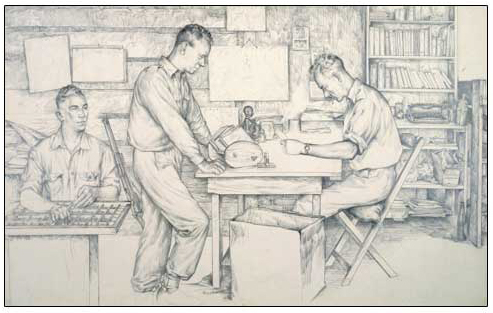
While he was an outstanding portrait painter, at other times Barns-graham seems to have difficulty in locating his figures in space. In the drawing of the three soldiers in an orderly room (Figure 9), the space between the seated figure on the left and the man standing next to him seems compressed, while the relationship of the latter to the table he appears to be leaning against is confusing.
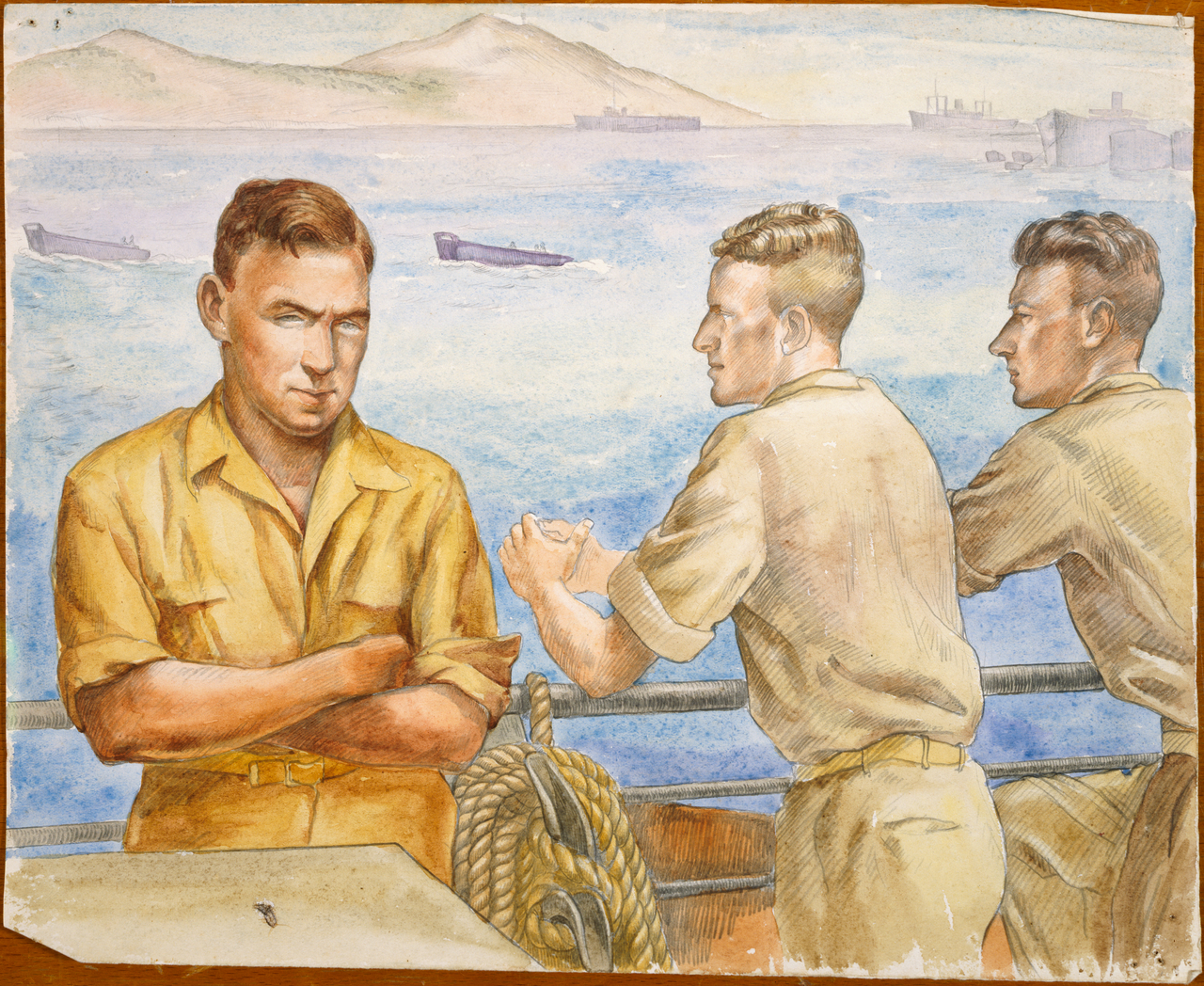
Barns-Graham’s figures can appear stiff, awkward, or incorrectly proportioned, as in his representation of three soldiers standing at a ship’s rail (Figure 10).
-
- Figure 9
-
- Figure 10
-
- Figure 11
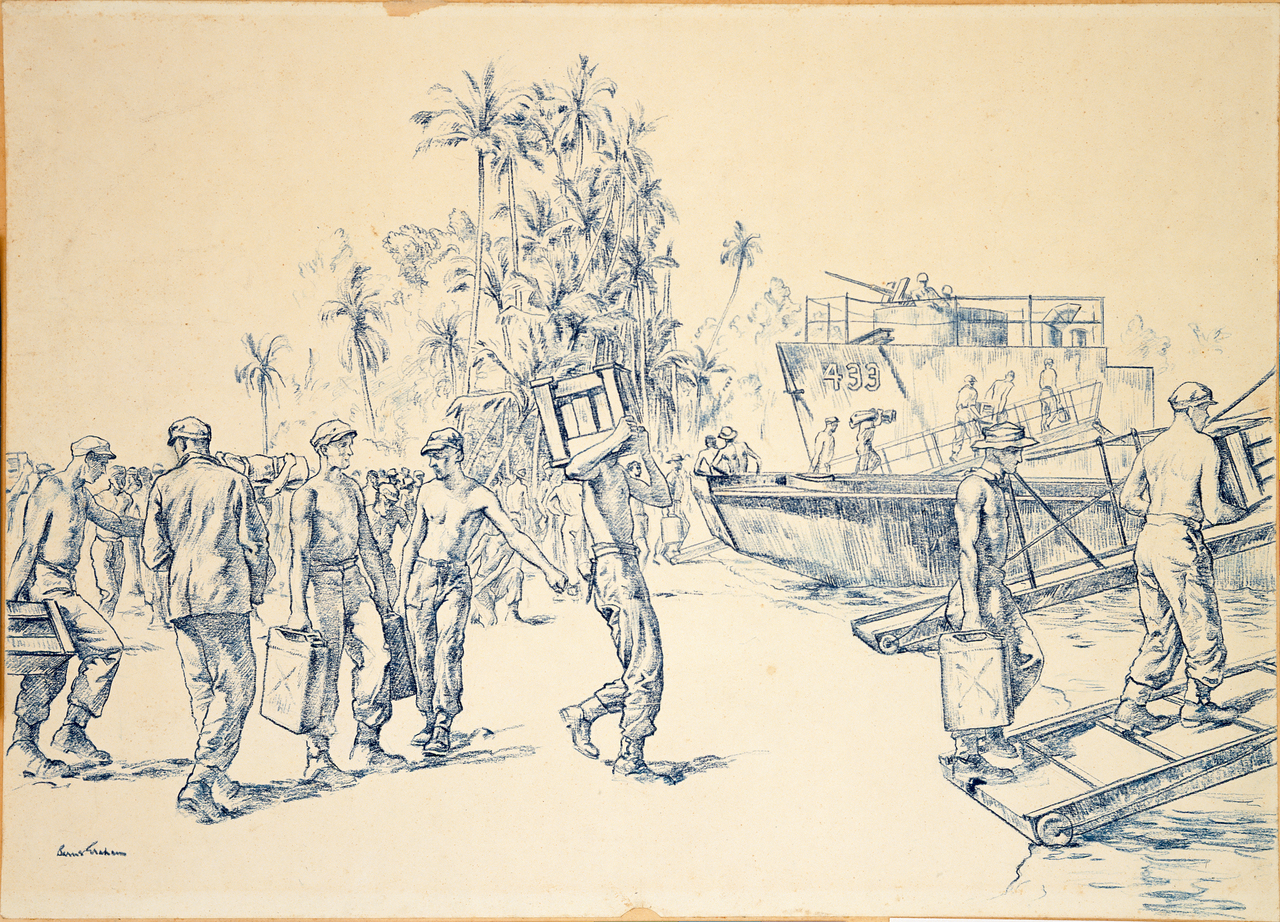
His study of men loading a landing craft on the other hand is a skilful rendering of figures at work, in a variety of positions (Figure 11). The bodies are well proportioned, anatomically detailed, and appear to move fluidly in space.
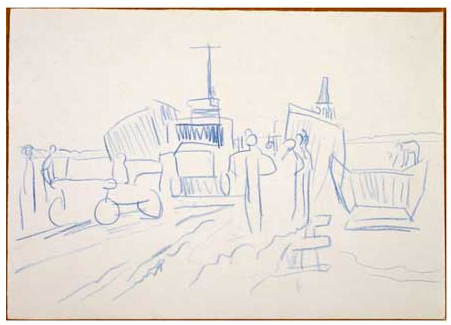
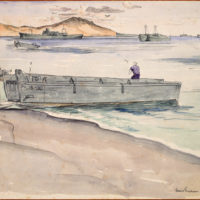
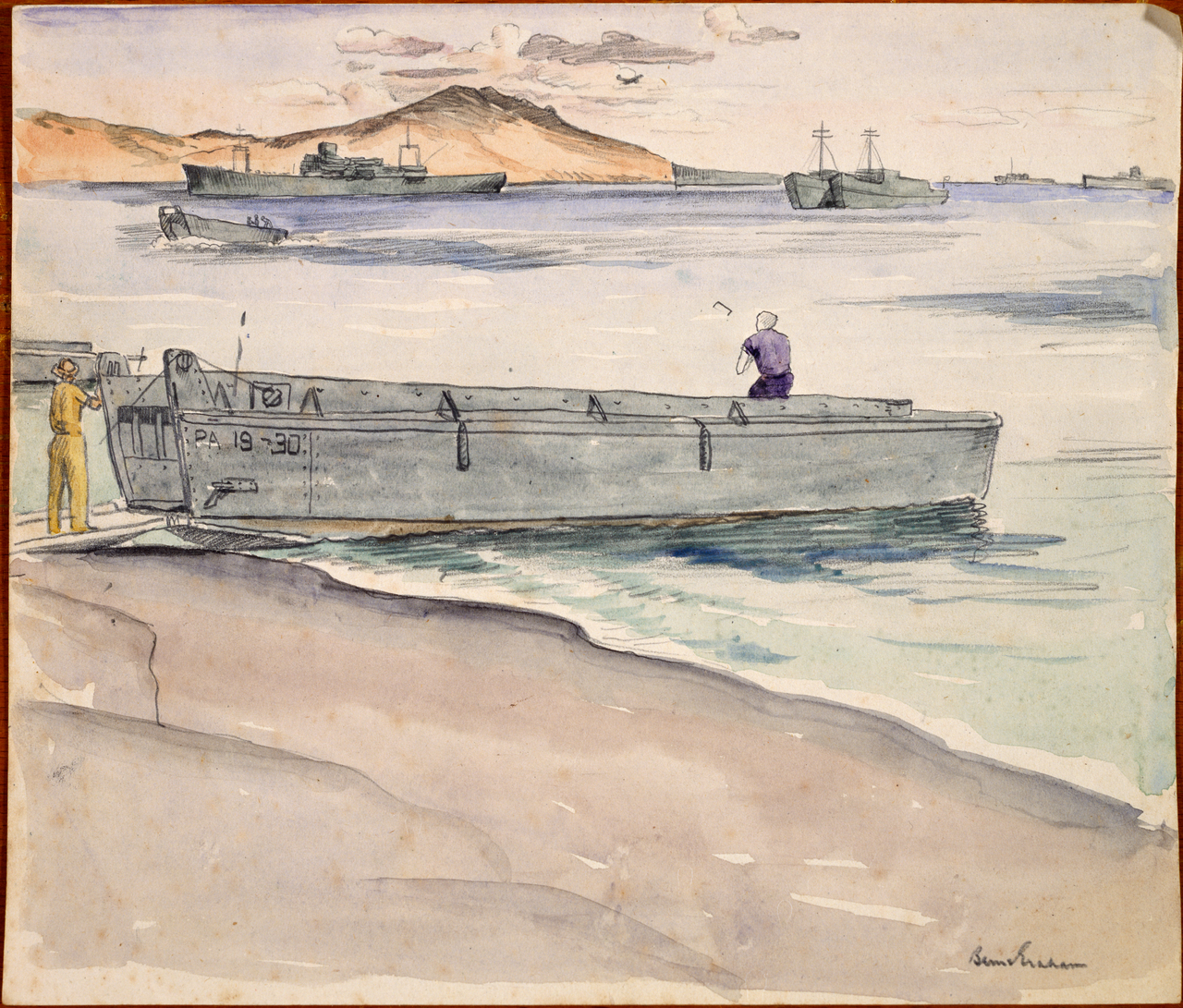
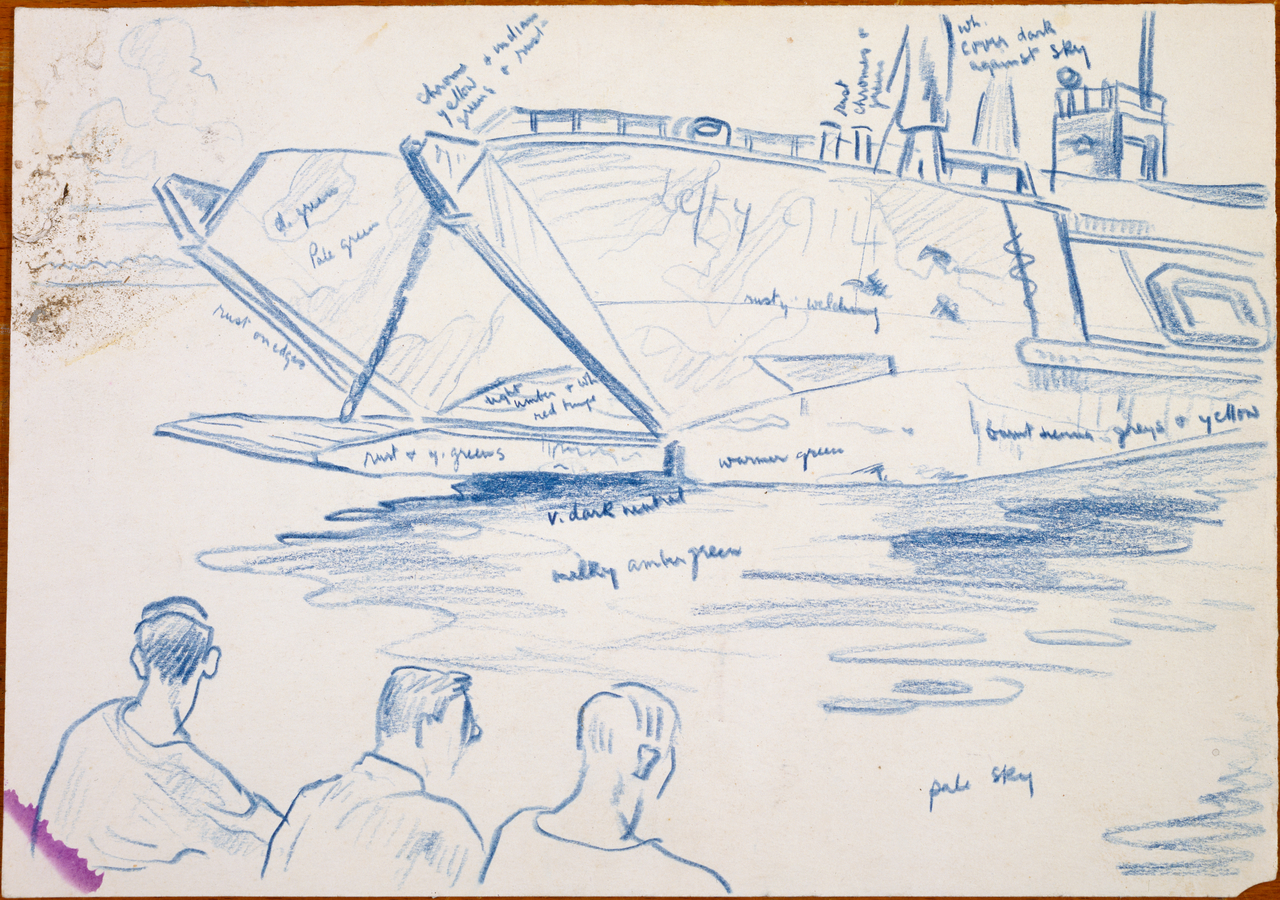
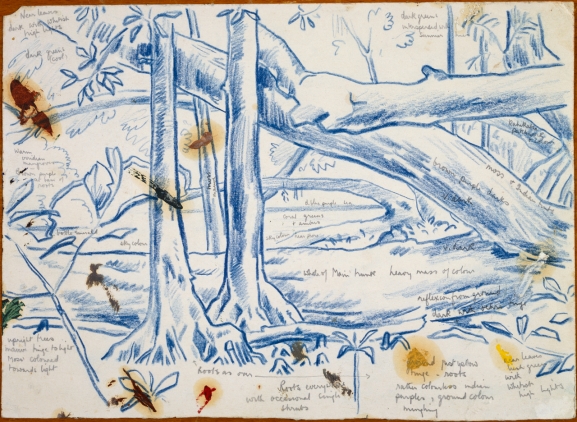
Like the other artists, Barns-Graham has left us with a collection of formal and informal artworks that provide an invaluable record of the activities and places that Kiwi servicemen were involved with in the Pacific War. His quick, fluid sketches, often used as the basis for more formal works later on, sometimes include colour notes and other written comments. In some, there is an economy of line, which sometime makes these drawings appear very contemporary (Figure 12). Often the drawings and water-colours are rawly executed and probably drawn in situ to get a scene down on paper (Figure 13).Occasionally the drawings include colour notes for use later on in the final painting (Figure 14).
-
- Figure 12
-
- Figure 13
-
- Figure 14
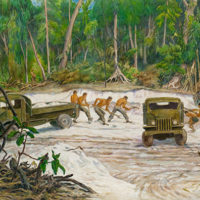
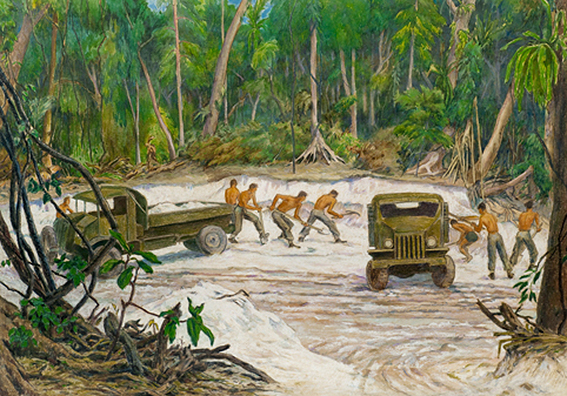
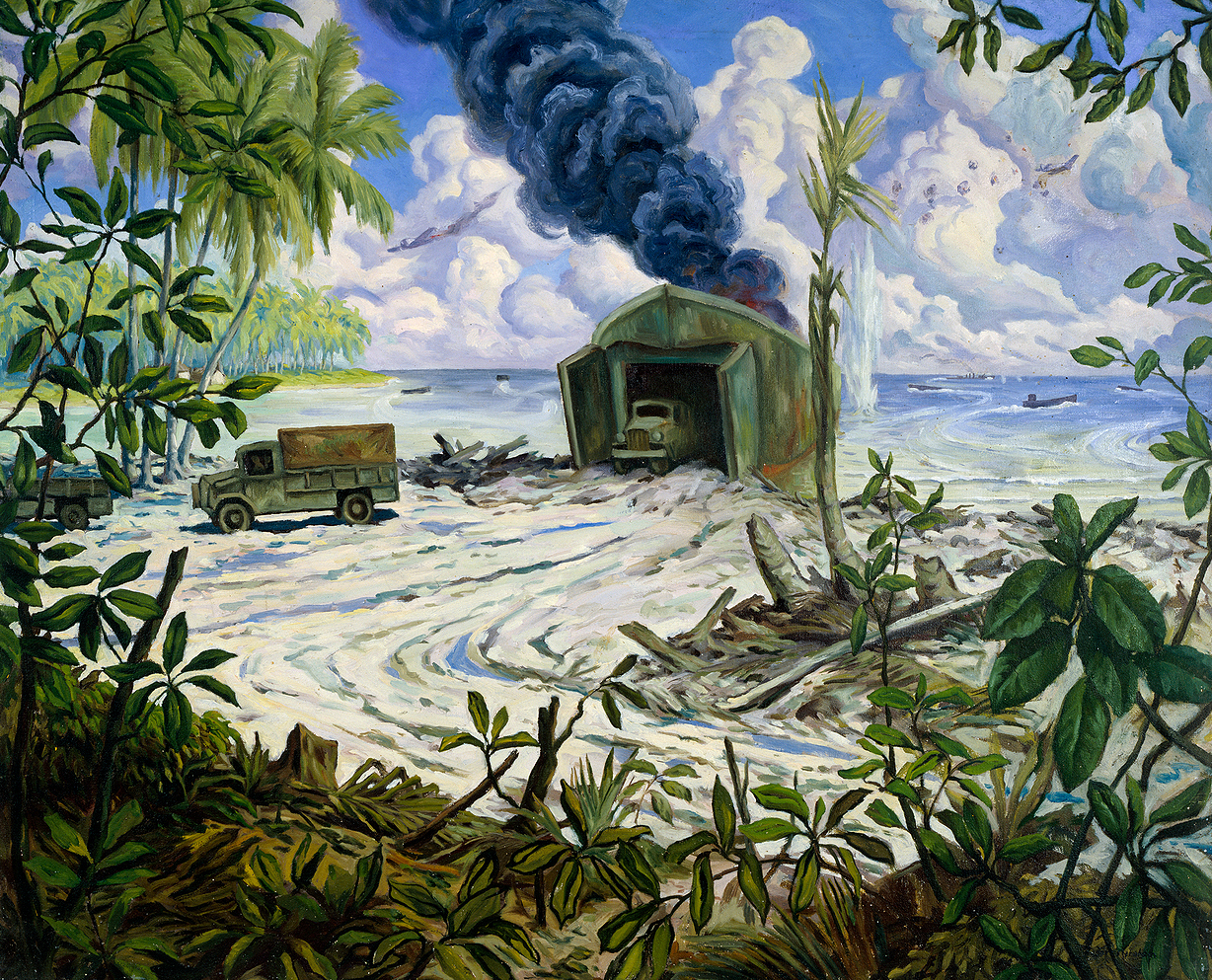
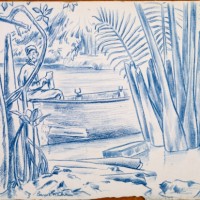
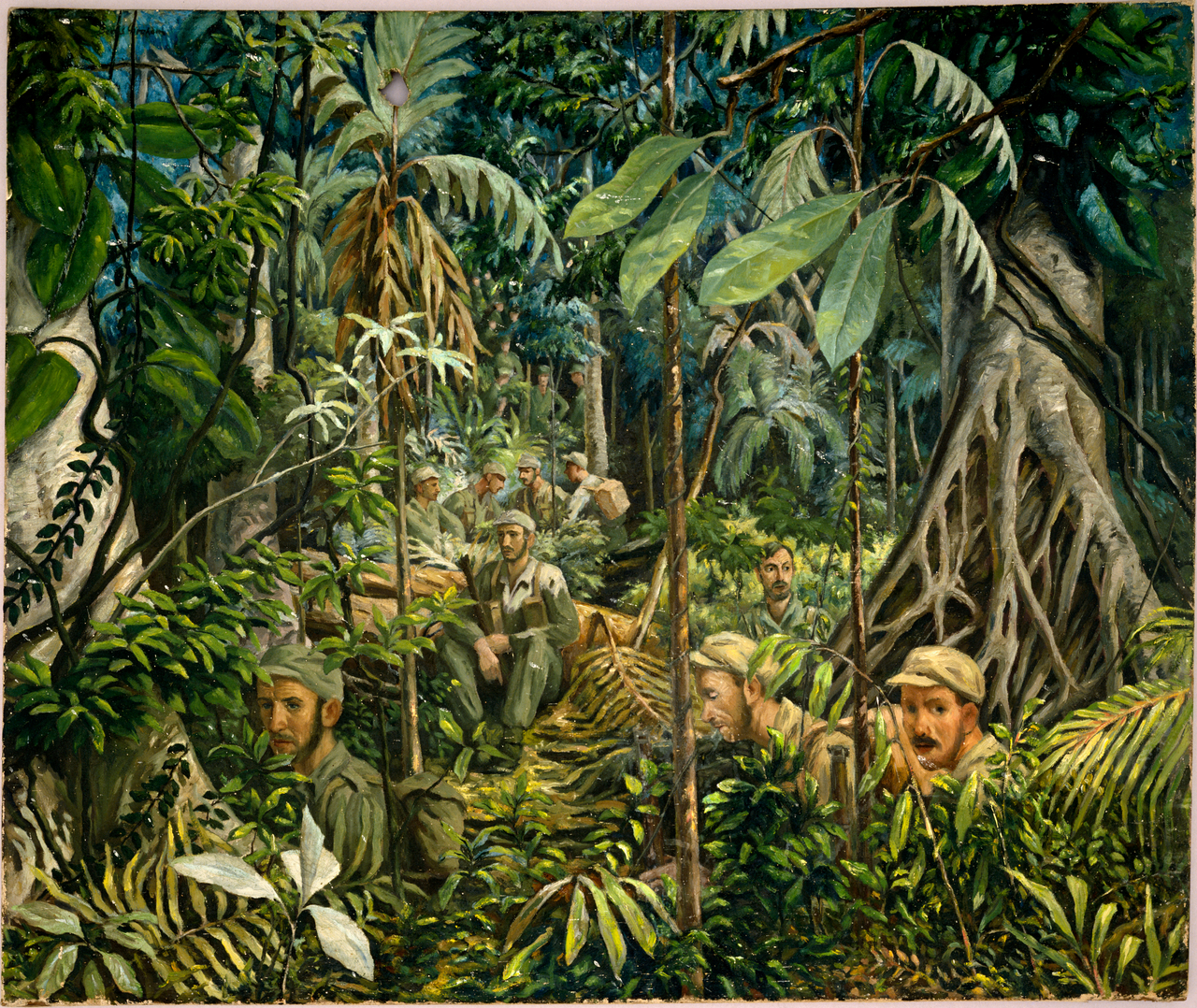
Even in his more formal paintings there is often a charming “naïve art” quality to Barns-Graham’s work. In his depiction of a team of men digging coral, which was crushed and used to make roads and footpaths (Figure 15), the trucks look like toys in a sand-pit, out of scale with the figures, who have few shadows against the whiteness of the coral, and consequently seem to have little weight. All the men look identical, more like a frozen animation of one man with a shovel than a group of interactive workers. Perhaps it is intended as a veiled comment on the way army uniforms destroy individuality, or possibly he intended to emphasise the singularity of the group of labouring soldiers, working toward a common goal and with a common cause. The group of soldiers works on in isolation, oblivious to us, the viewer. As in other Barns-Graham works set in the jungle, whether in paint or coloured pencil (Figures 16 and 17), foreground trees and bushes are used to frame the action, creating a sense of detachment in the viewer, possibly as if we are the enemy observing an activity beyond.
-
- Figure 15
-
- Figure 16
-
- Figure 17
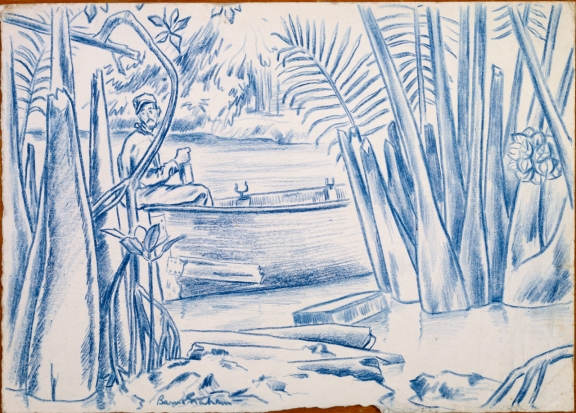
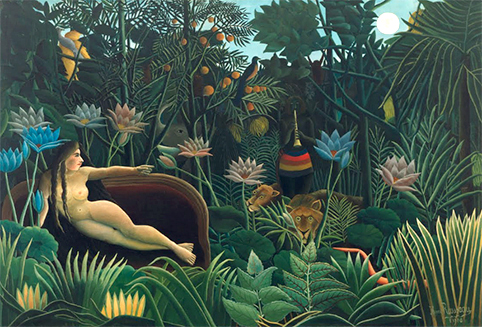
Like Russell Clark, Barns-Graham took a strong interest in international developments in art and the influence of several artists can be detected in his work. The naïve or primitive element in his paintings are possibly a response to the works of the French Post-Impressionist/Proto Surrealist Henri Rousseau. Uniquely among New Zealand soldier-artists, Barns-Graham expresses his creative fascination with the exotic mystery of the tropical jungle in his surrealistic interpretations of the landscape.
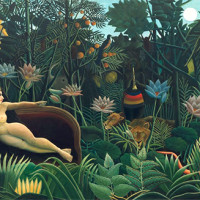
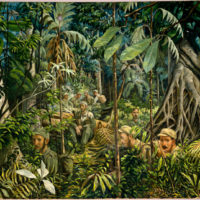
Rousseau’s “The Dream” 1910 (Figure 18) with its luxuriant jungle foliage and its hidden figures and animals, is a possible inspiration for “Soldiers in the Jungle” (Figure 19). Unlike Rousseau’s stylised plant-forms, the jungle foliage in Barns-Graham’s painting is beautifully, almost super-realistically depicted, and is botanically accurate.
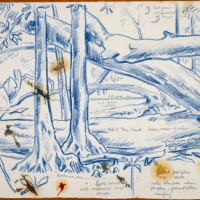
Rousseau’s jungle is imaginary, Barns-Graham is showing us the real thing. His many detailed and accurate studies of plant forms made in the jungle during his time in the Solomons demonstrates his strong interest in recording them for future use in final paintings, as in “Jungle Trees” (Figure 20) And yet, as in “Men Digging Coral”, Barns-Graham has employed the curious device of repeating the same figure in multiple locations, which lends the painting a strange, dreamlike quality. As in other works by Barns-Graham, it is difficult to precisely place the figures spatially in relation to their surroundings: he has turned what is arguably a deficiency in other contexts into an effective tool to lend a sense of uneasiness to the work.
-
- Figure 18
-
- Figure 19
-
- Figure 20
There is a twist in our reading of the two paintings however. In Rousseau’s work the animal forms (lions, snake, birds, elephant) are naturally hidden elements of the jungle environment. Rousseau forces us to look closely at the painting to find them. Barns-Graham’s characters on the other hand are deliberately camouflaging themselves in an attempt to integrate their un-natural presence into the surrounding foliage.
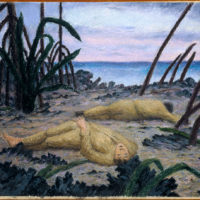
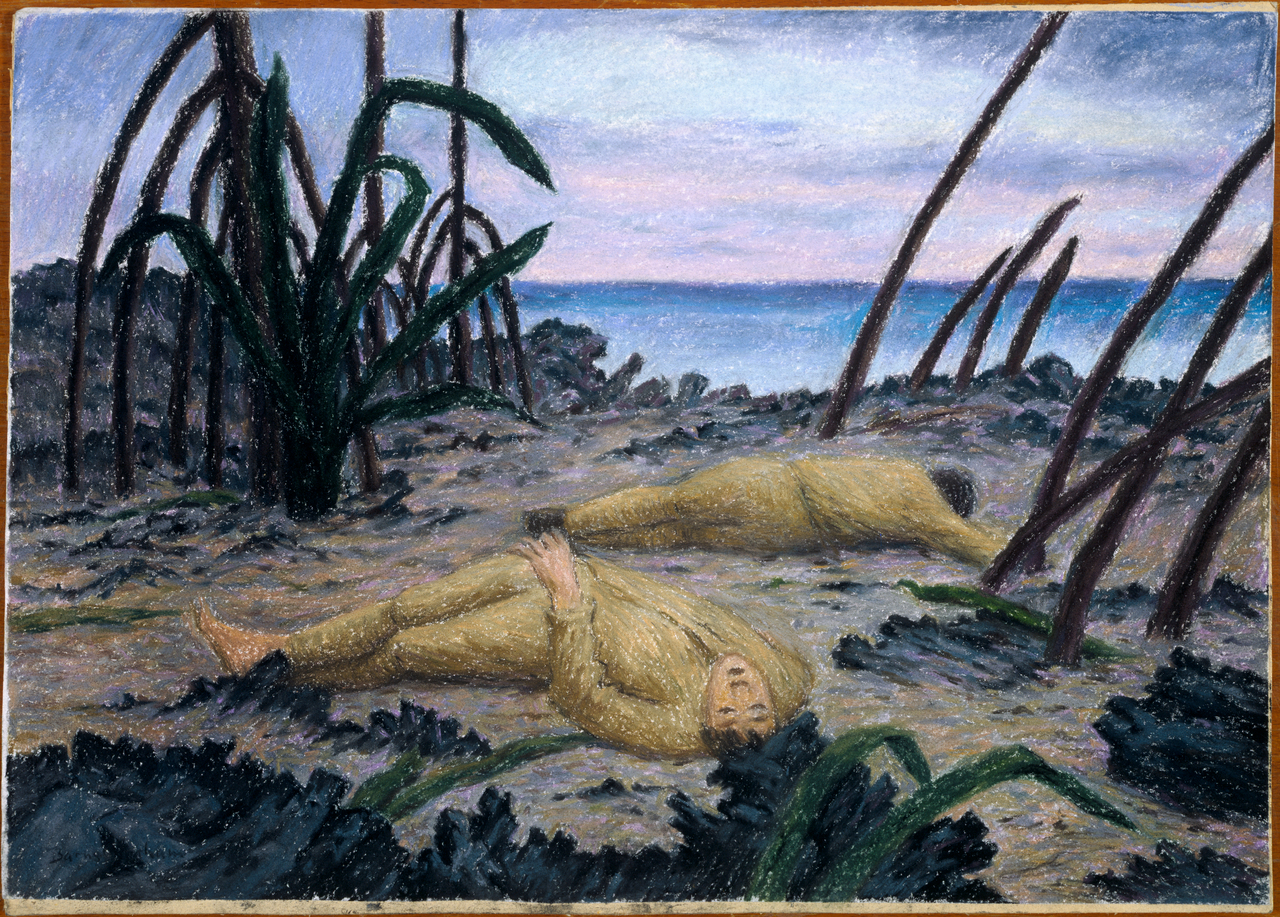
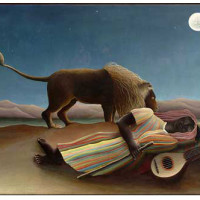
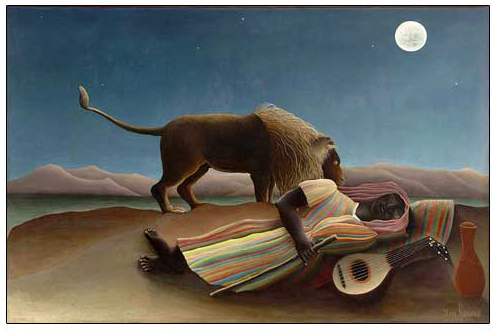
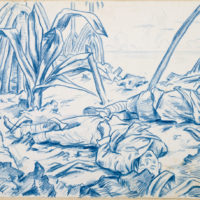
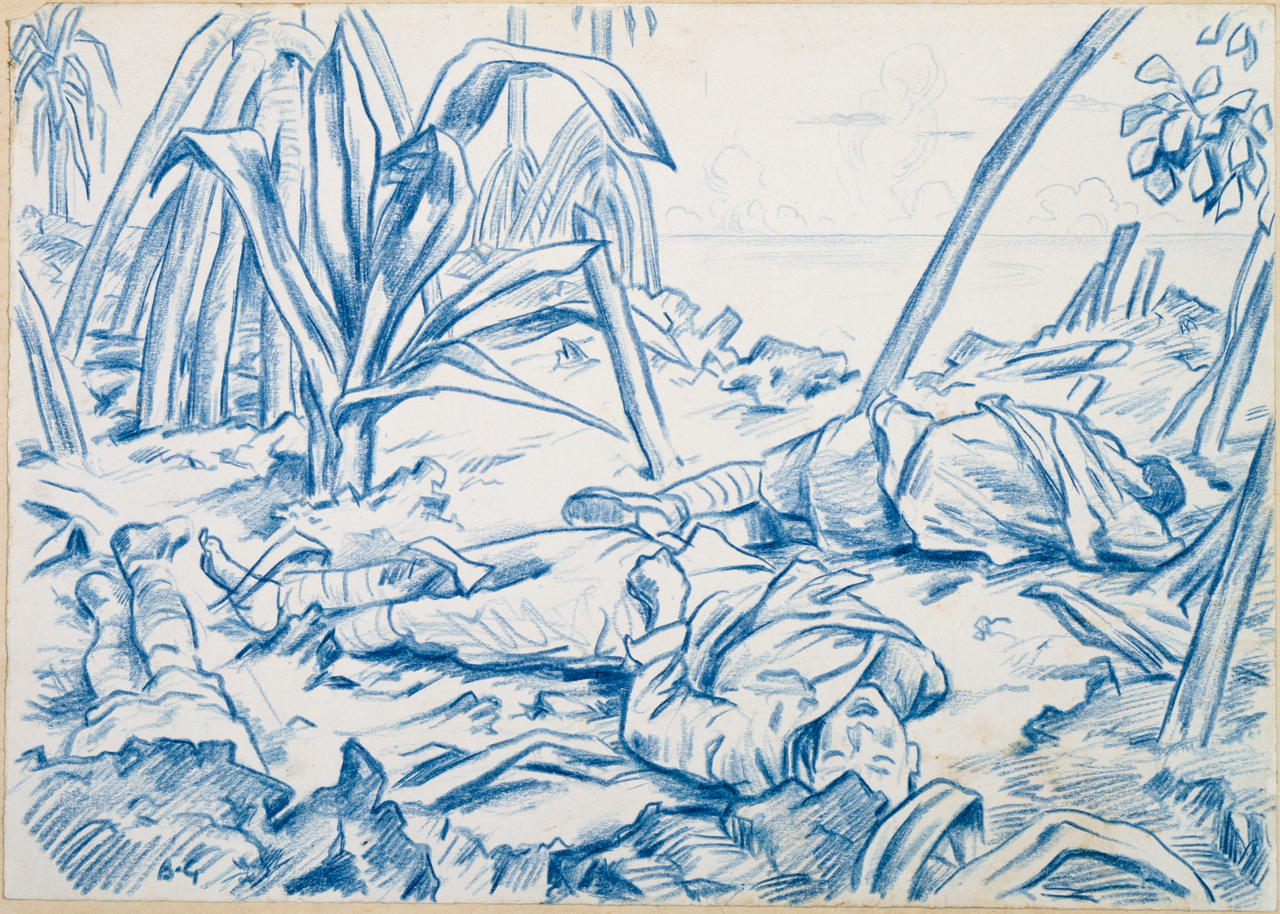
Barns-Graham’s “Two Bodies on a Beach” (Figure 21) bears a haunting resemblance to Rousseu’s “Sleeping Gypsy” 1897 (Figure 22), compositionally and in the arrangement of the foreground figure, as well as in its eerie moonlit landscape, containing figures which could be either dead or sleeping. The unsettling mood in this painting, one of Barns-Graham’s most interesting images, is enhanced by his treatment of the burnt vegetation enclosing the two soldiers, which has the appearance of giant hair follicles, thus transforming the two figures in our imagination into dead fleas or lice laying on the scalp of a gigantic balding man. The original sketch the painting was based on (Figure 23) depicts two Japanese soldiers, but the underlying message of this surrealistic painting can be construed as an anti-war one: two essentially anonymous, uniformed and insignificant bodies, their nationalities and race indeterminate and inconsequential, laying forgotten on an otherworldly, alien beach.
-
- Figure 21
-
- Figure 22
-
- Figure 23
Barns-Graham settled into his career as art teacher following the war and does not appear to have continued to produce artworks as significant as those he created while on active service in the Pacific, as his fellow official war artists Russell Clark and Maurice Conly did. Nonetheless, he was an interesting artist and deserves a higher profile than he has, both as a war artist but also as an important New Zealand painter.
Archives New Zealand has a substantial collection of Barns-Graham’s work:
http://warart.archives.govt.nz/AllanBarns-Graham