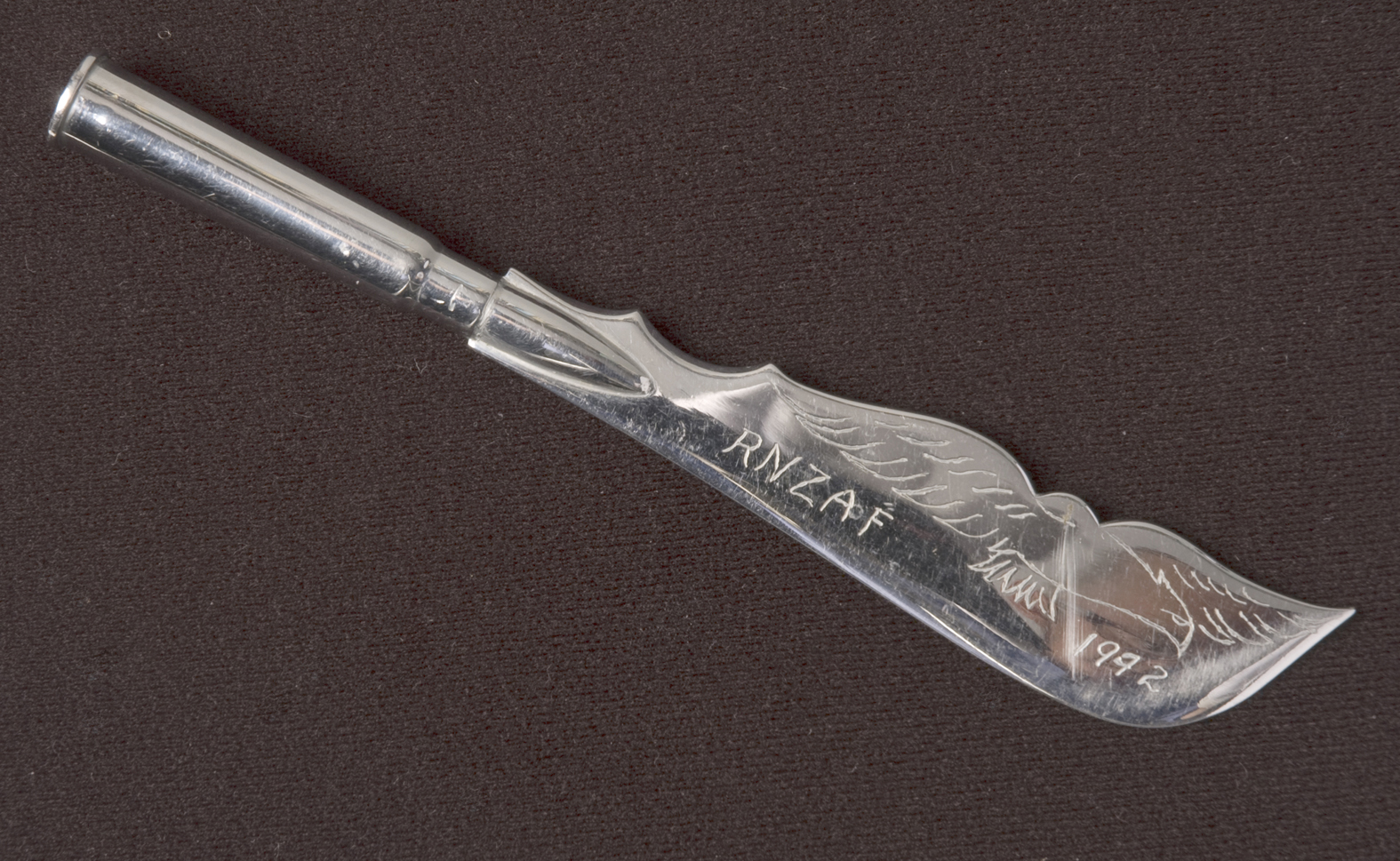
In terms of three dimensional artworks, the most common form of soldier art produced in the Pacific, as in other WW1 and WW2 theatres, was probably the letter opener knife. Sometimes the shape suggests that the intended function was more as a cheese-knife.
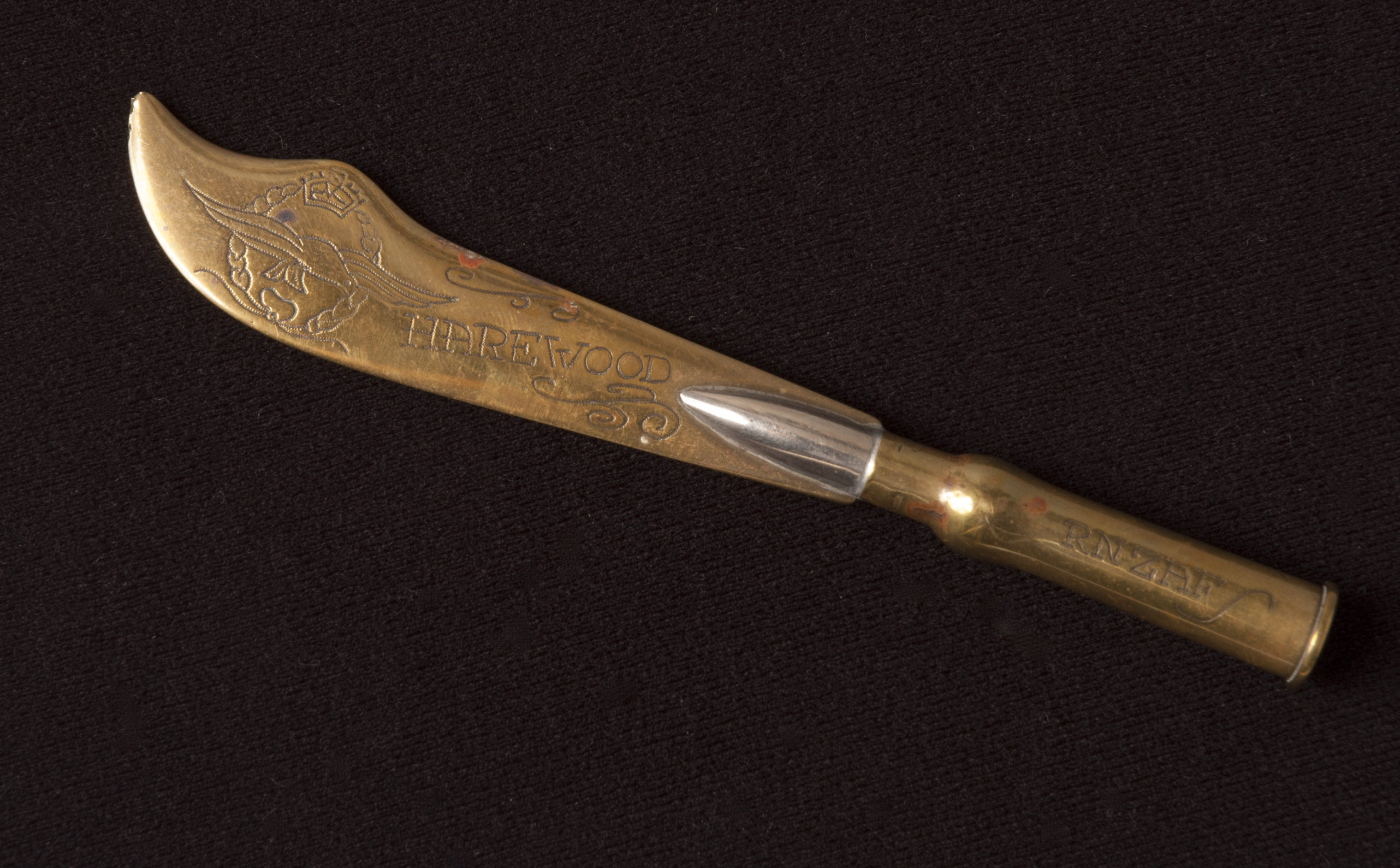
Countless numbers of these implements were produced, in a huge range of styles. A utilitarian object from the time before emails made them redundant, they were fairly easily constructed from a .303 rifle bullet and scrap metal from a shell casing, a hacksaw and a soldering iron. They were often engraved with the maker’s name and unit, or the place where he was serving. Many were chrome-plated when they arrived back in New Zealand at the war’s end.
Those made in the Pacific War were generally of quite simple design compared to the often elaborate items from World War 1 that are recorded in Jane Kimball’s book on trench art. This could be because the range of materials was limited compared to what was available on the Western Front.
Nevertheless high level of skill was demonstrated in many of the letter knives, none more so than those produced by the maintenance personal in the Air Force, with their advanced training and access to sophisticated workshop machinery. While the most prolific and skilled of these was arguably Ron Hermanns, who created an impressive range of objects including jewellrey (refer also to separate section on Ron Hermanns in this website), there are many other examples of elaborately designed and finely crafted work by New Zealand Air Force personnel (Figures 1 – 6).
-
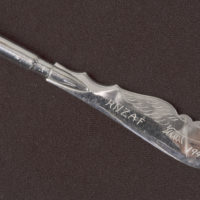
- Figure 1
-
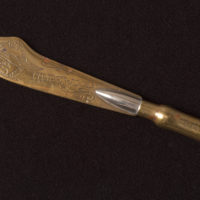
- Figure 2
-
- Figure 3
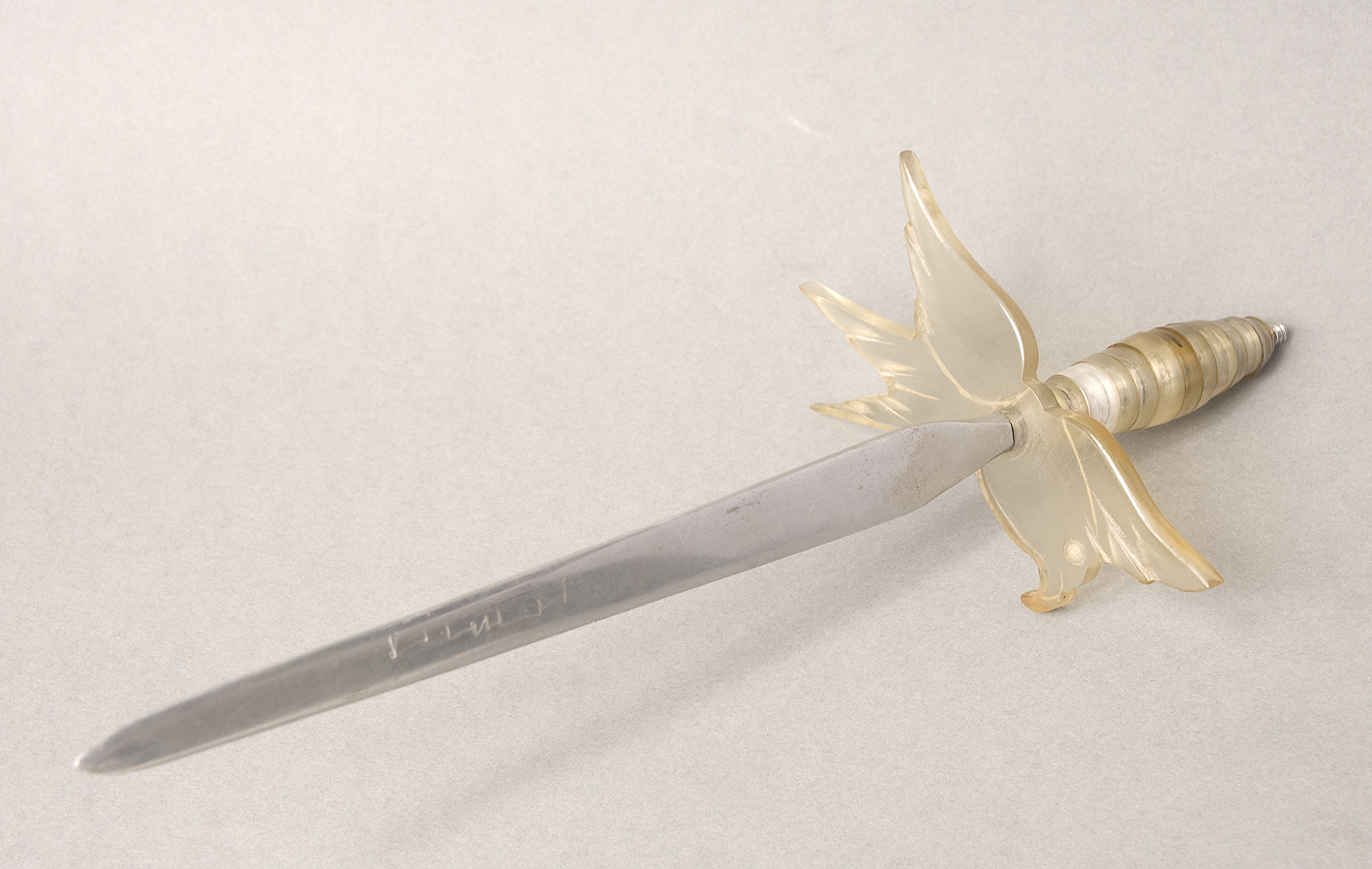
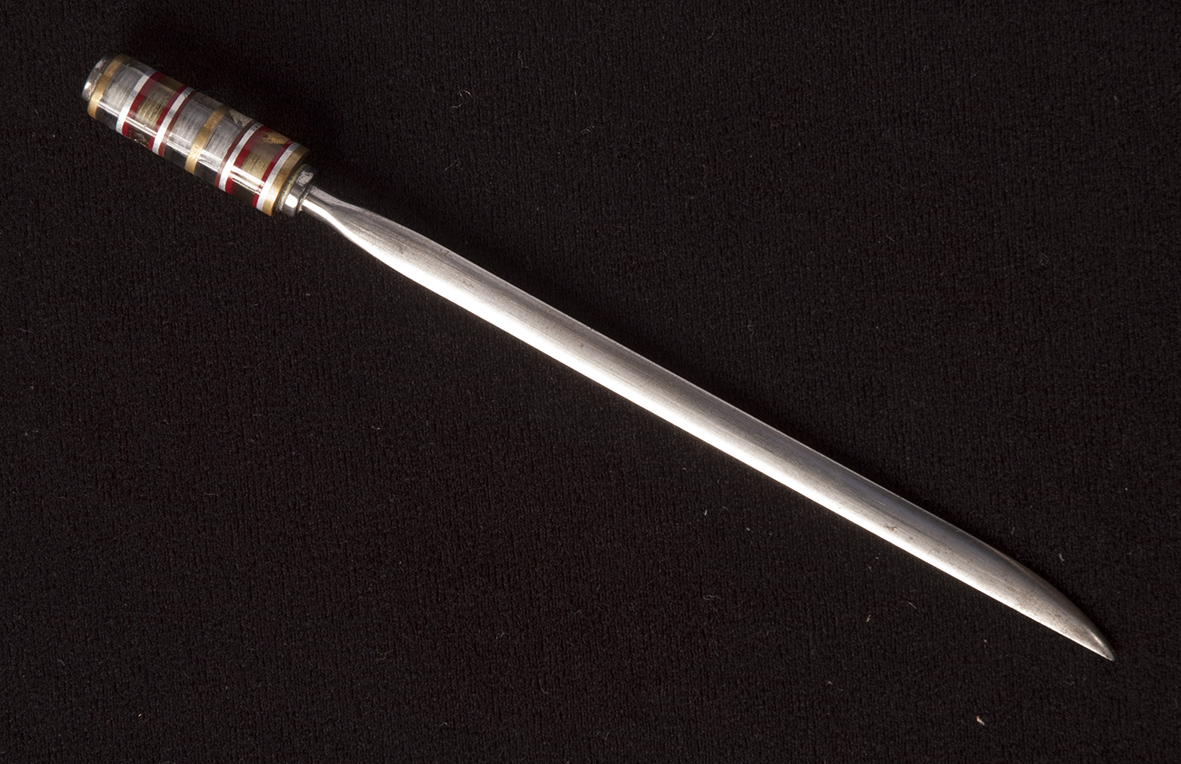
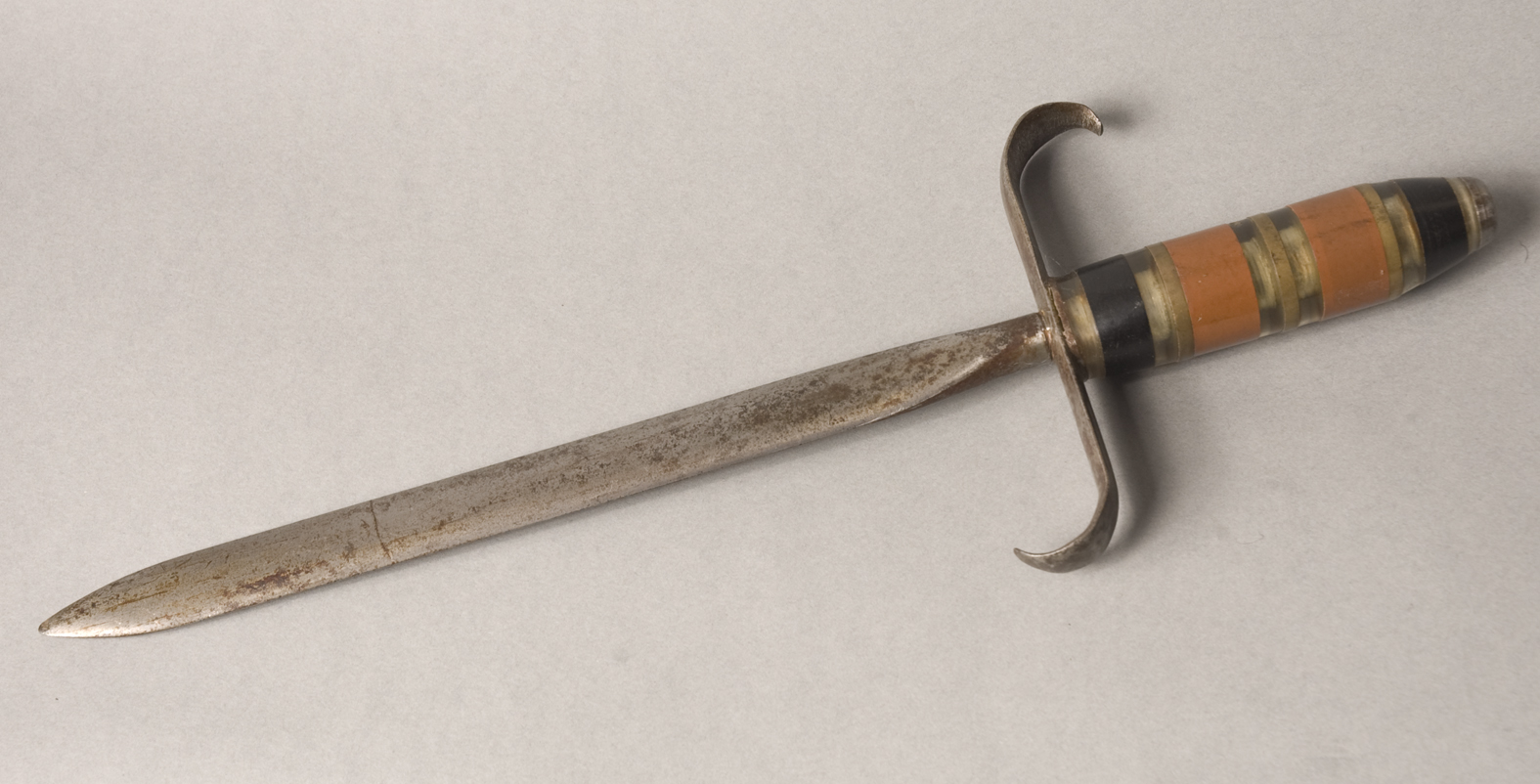
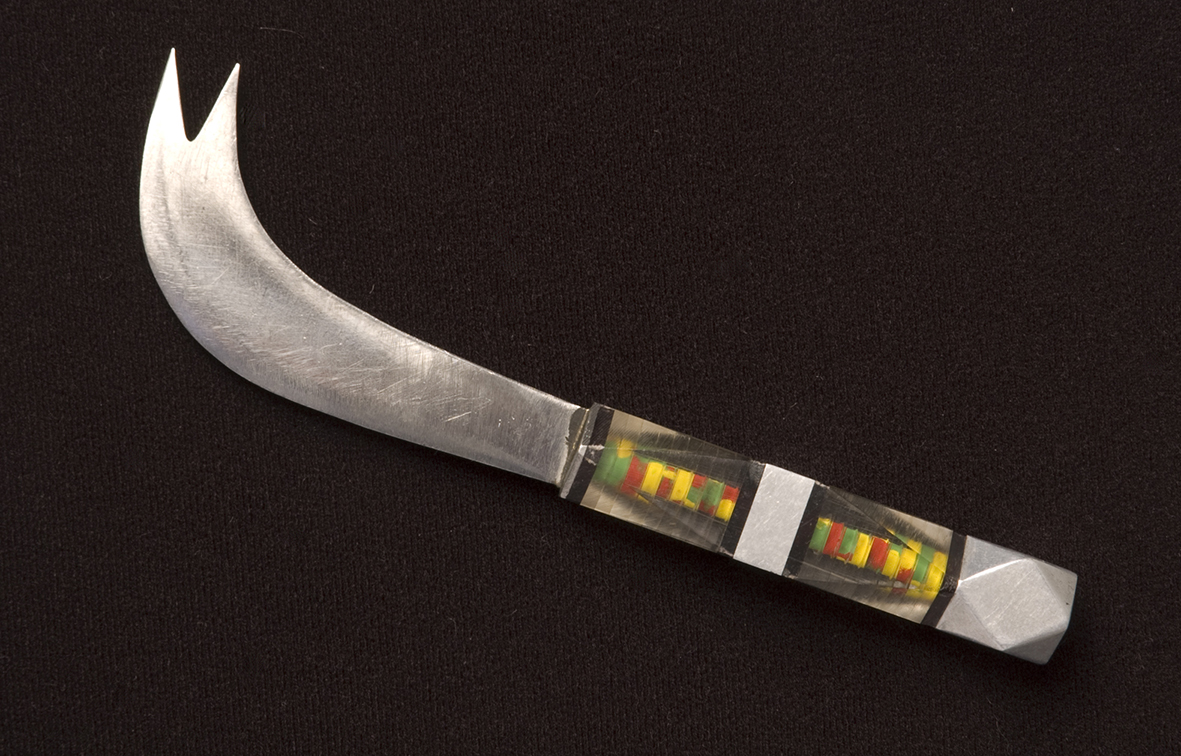
The variety of designs and the innovation involved in adapting materials at hand to manufacture this simple device is truly mind boggling. The most commonly used handle employed a .303 rifle bullet (Figures 1 and 2), but more sophisticated models used metal or perspex, sometimes in several layered colours (Figure 4 – 6), taken from aircraft. The latter were glued together and probably shaped on a lathe. The degree of sophistication achievable using this technique is demonstrated by the cheese-knife shown in Figure 6.
-
- Figure 4
-
- Figure 5
-
- Figure 6
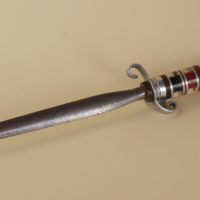
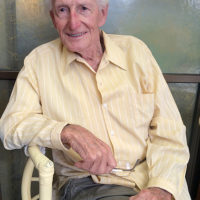
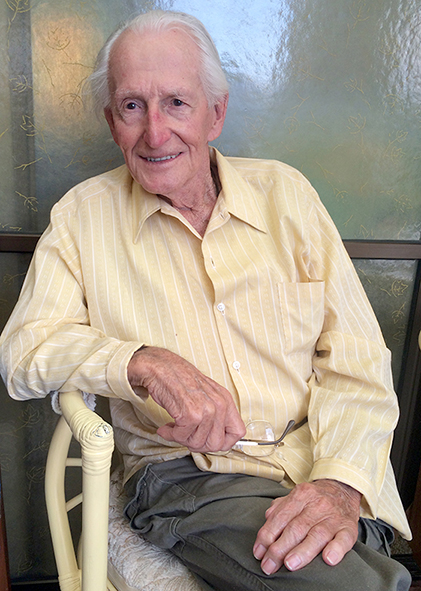
The blade might be cut from beaten brass from an artillery casing, or sometimes from an aircraft strut, as in Figure 7. This example is one of the few whose provenance is known: it was made by Alan Minola, who was my Technical Drawing teacher at Orewa District High School (now Orewa College) in the 1960s. Allan served as an aircraft mechanic with the RNZAF in the Bismarck Archipelago. The sharp, stiletto-like appearance of Alan’s design gave him concern when I visited him shortly before his death. He expressed the thought that it should be destroyed because he considered it dangerous.
-
- Figure 7

-
- Figure 8
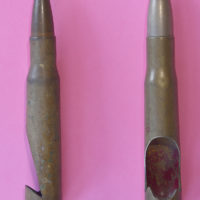
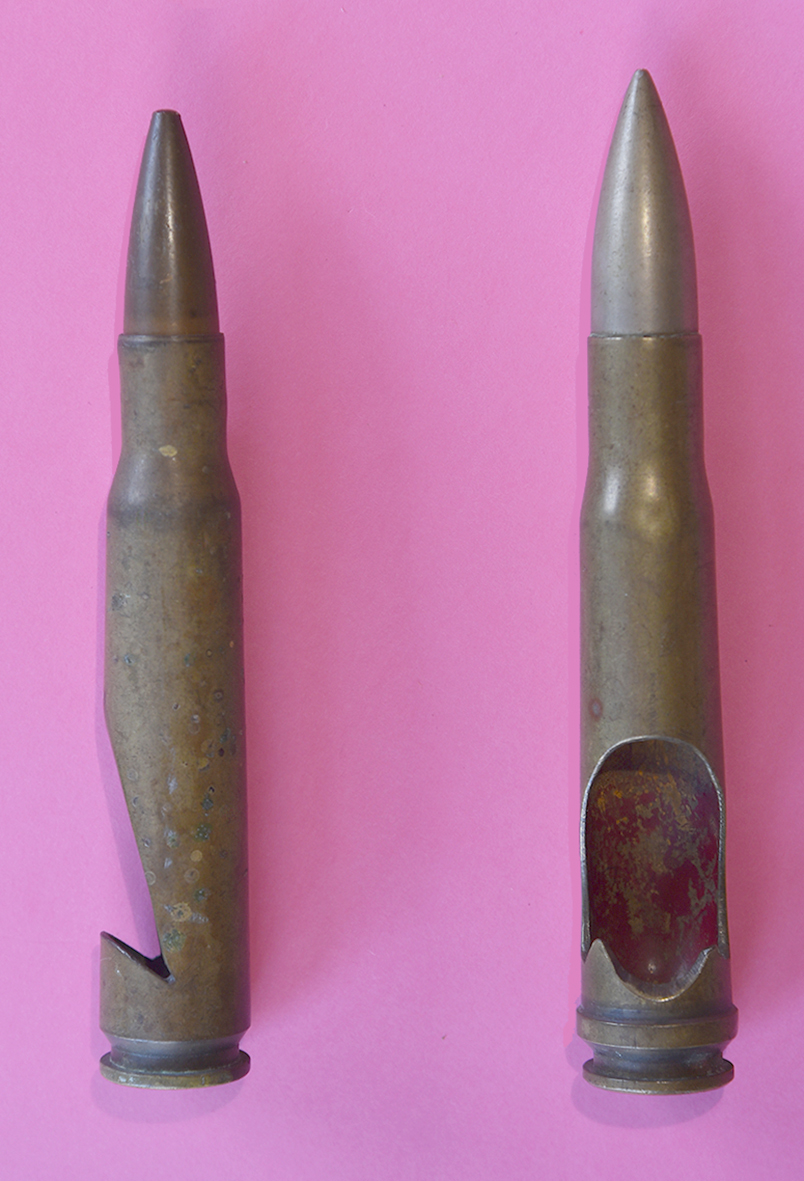
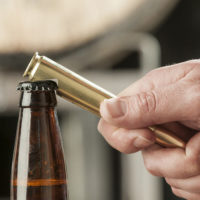
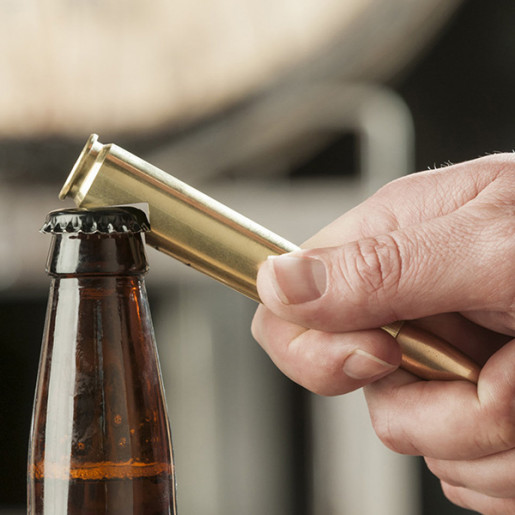
An even simpler device, usually made from an armour-piercing 50 calibre cartridge, was the bottle opener, a handy device to have when beer rations came around. These were made by “delousing” a 50 calibre round, joining the projectile back to the empty cartridge case, and cutting a notch in the base of the cartridge case. With the implement turned upside down, the notch could then be used to lever a bottle top from an unopened bottle.
-
- Figure 8
-
- Figure 9
-
- Figure

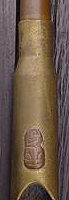
The example shown in Figures 11 and 12 includes a Maori hei tiki design cut from a New Zealand half-penny coin, bent to fit the curve of the cartridge case and soldered on to it. Since the coin was brass like the cartridge case, they complement one another visually.
Three Dimensional Work:
A variation on the letter knife was the cheese knife.
Vases
Jewelry: use photo of sweetheart brooch mould
Bottle openers
Cigarette lighters
Ash trays
Watch straps
Models in metal and wood