Frank IvanCooze, born in Wellington in 1907, belonged to a Light Anti-Aircraft Battery, and appears to have followed a similar path to Harry Stone, who was part of the 54th. Anti-Tank Battery. Cooze was present when the Japanese attacked Henderson Field in Guadalcanal, which was described in detail Harry’s war diary on 21st September 1943.
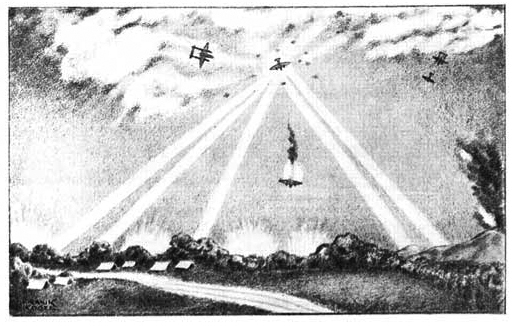
Harry’s description of the event accurately backs up Cooze’s drawing (Figure 1):
“One plane was caught in the searchlights for a moment then burst into flame, falling straight to earth. The lights caught a second one and a ‘night fighter’ finished it off. Boy did she burn, half way down the plane broke up, evidently one wing and motor fell rapidly past the burning fuselage. The motor left on the plane screamed as she came down, hitting the ground with a hell of a wallop and a good flash.”
Harry got a ride down to the airfield the next day to view the wreckage, and the bodies of two Japanese airmen laying nearby. Japanese airmen were not issued with parachutes.
-
- Figure 1
-
- Figure 2
-
- Figure 3
The dirt road in the foreground of Cooze’s drawing is that running along Edson’s Ridge, the tents must represent part of the New Zealander’s campsite. The fighter planes attacking the Japanese bombers in the drawing are clearly P38 Lightnings.
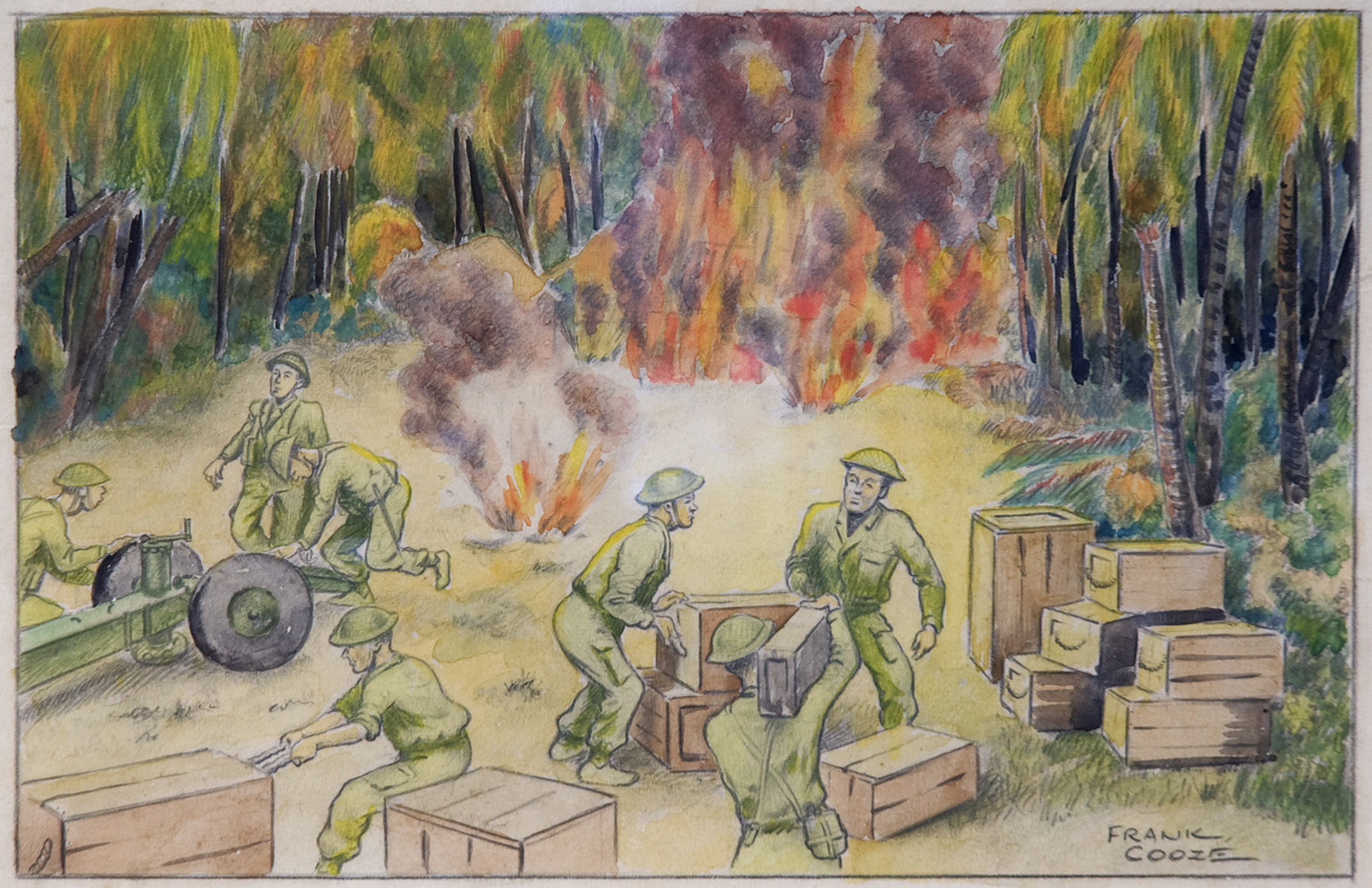
Cooze was also present during the invasion of Mono Island, apparently going in with the First Echelon. My father was part of the Second Echelon. The New Zealand National Army Museum holds a delightful naively painted watercolour called “Landing Stores on Mono Island” (Figure 2), showing Japanese mortars exploding amongst the New Zealand soldiers as they work to establish a beachhead. A tent is on fire in the background. The figures appear strangely static: it is interesting to compare this with official war artist Russell Clark’s more dramatic and animated versions of soldiers under attack (refer to section on Russell Clark).
Cooze was invalided out of the Solomons, spending time in hospital in New Caledonia before returning to New Zealand. It is not known whether he was wounded or suffered an infection.
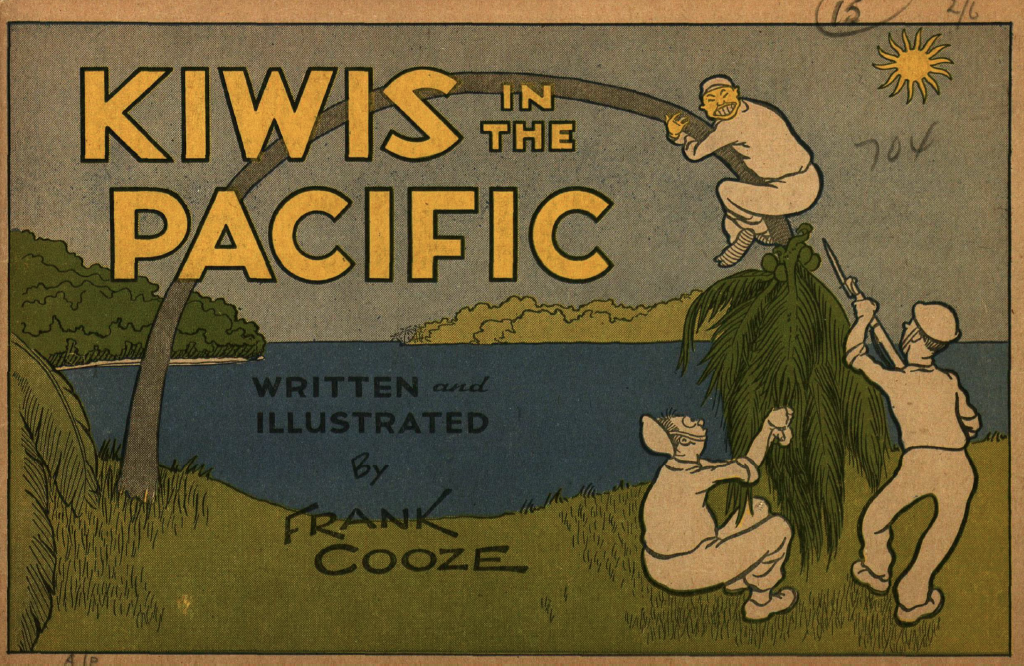
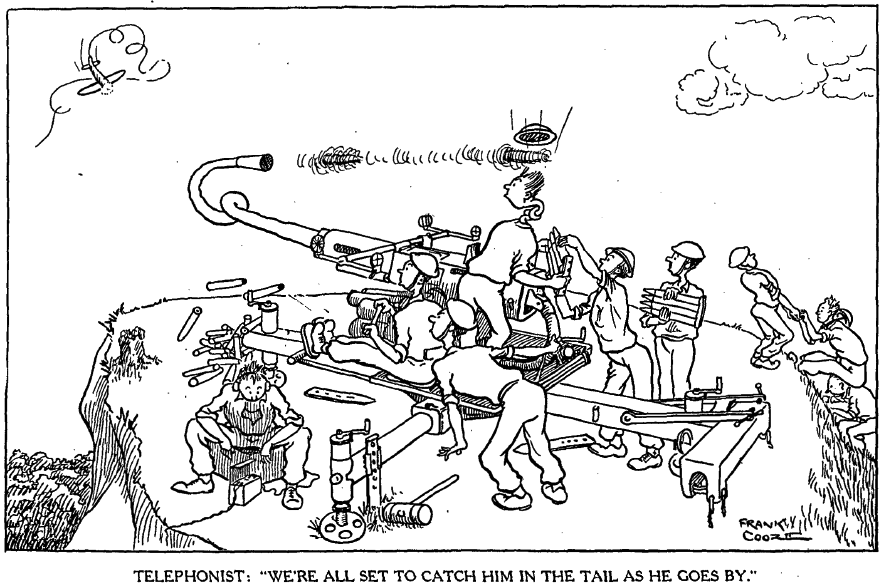
When he got home he produced a small booklet of cartoons depicting his experiences called “Kiwis in the Pacific” (Figure 3).
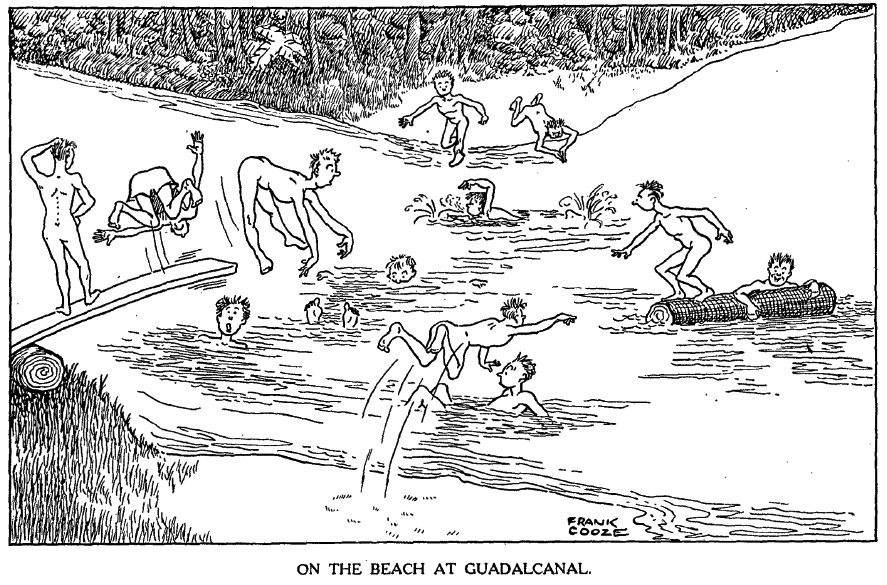
He was perhaps a better cartoonist than painter. His drawings provide a witty, light-hearted and often insightful snapshot of life in the army on Guadalcanal (Figures 4 and 5).
-
- Figure 4
-
- Figure 5
Frank Cooze was invalided out of the army, returning to the hospital in New Caledonia in 1944, before being sent back to New Zealand. He died in 1995.