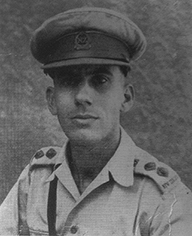
Lieutenant Herbert James Bowkett Coe (Figure 1) was born in Timaru in the South Island in 1917. He attended Canterbury College of Fine Art until he joined the Third Division in the Pacific. He continued to practise his art while on active service and frequently made portraits of his fellow soldiers so that they could send them home to their families.
He was also an industrial designer and an early proponent of ergonomic design.
There are few artworks by Coe in the public domain, apart from two paintings in the National War Art Archives, and a handful of paintings and drawings mostly created after the war at Museum of New Zealand Te Papa Tongarewa.
https://collections.tepapa.govt.nz/agent/5774
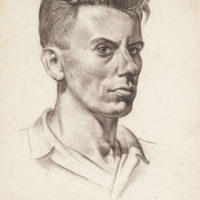
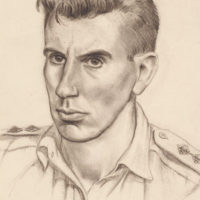
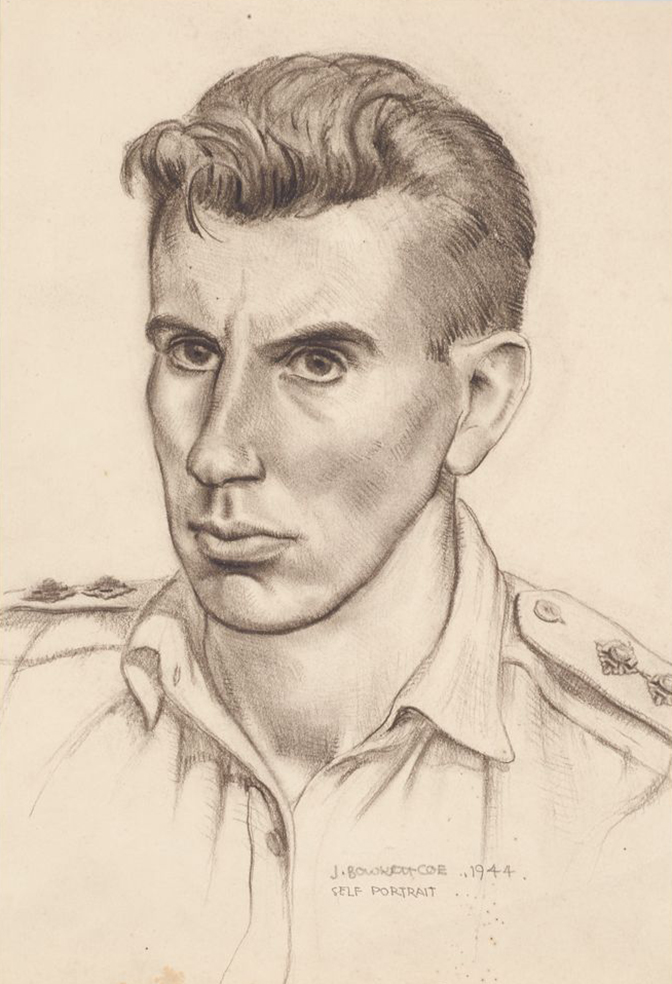
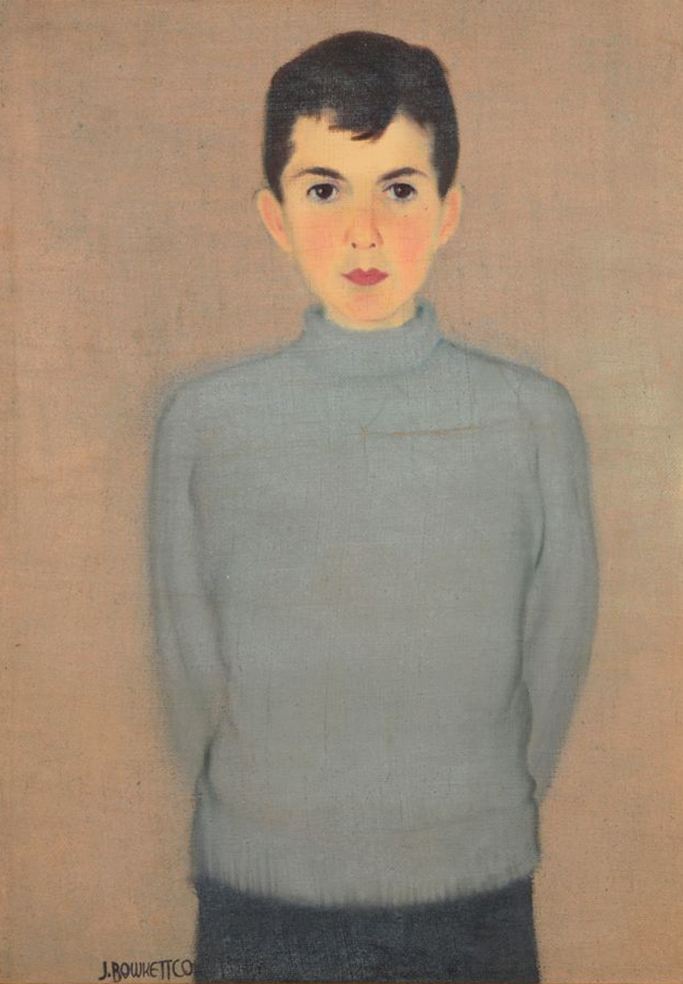
Included in this set are two exquisite, delicately drawn self portraits in pencil (Figures 2 and 3), made toward the end of the war, the first apparently in civvie shirt, the second in uniform. In both of these works Coe looks towards the viewer with an intense, slightly dour expression. There is also a painted portrait of his brother Desmond made in 1939, the war began in Europe (Figure 3).
-
- Figure 2

-
- Figure 3
-
- Figure 3
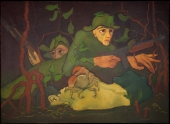
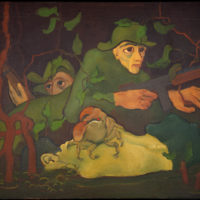
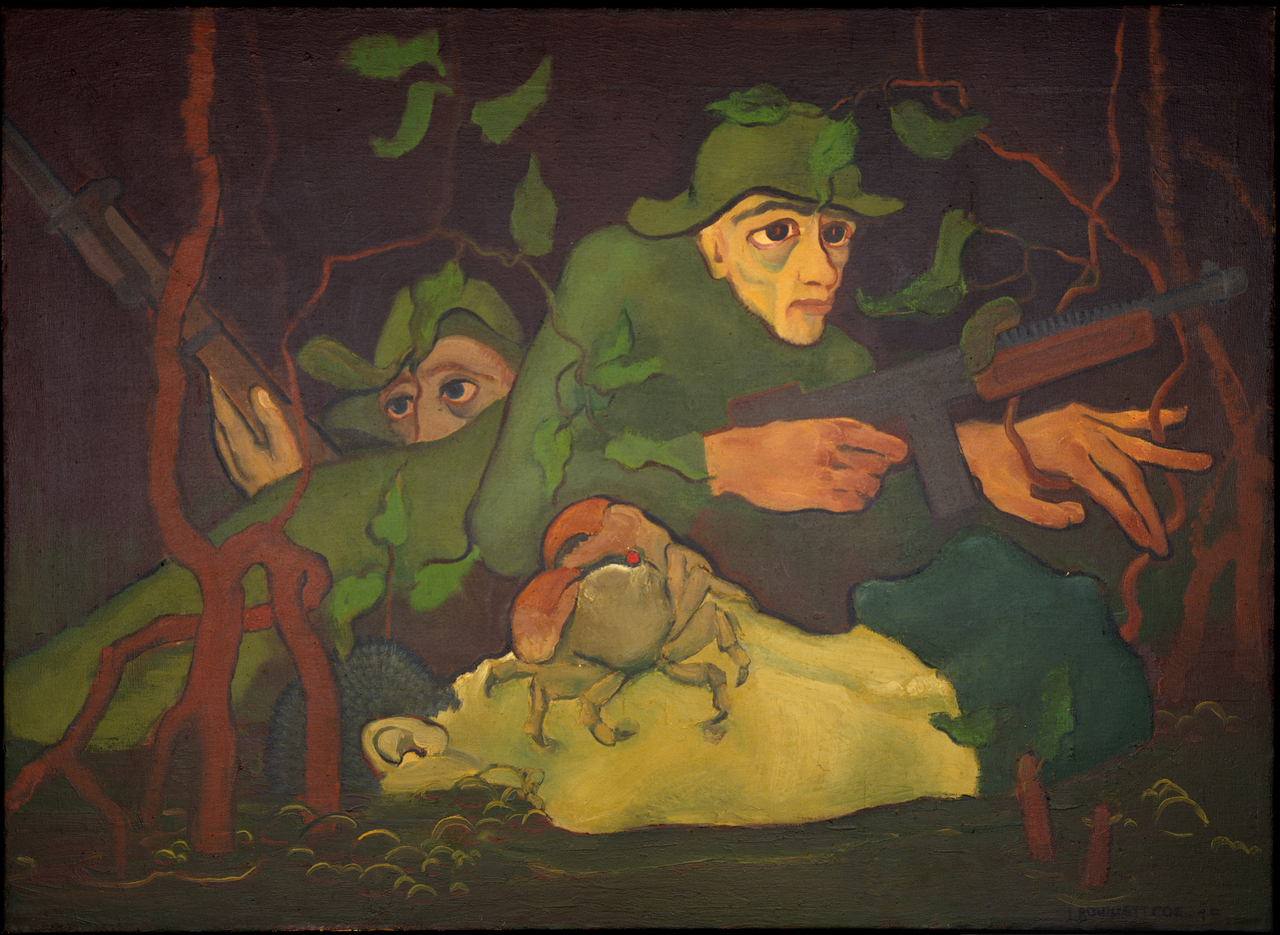
In “The Patrol” (Figure 4) at the National Archives, a pair of gaunt, apprehensive soldiers crawl through what appears to be a mangrove swamp, their eyes wide and their expressions fixed. A land crab observes them from the foreground, the soldiers oblivious to it.
-
- Figure 4
-
- Figure 5
-
- Figure 6
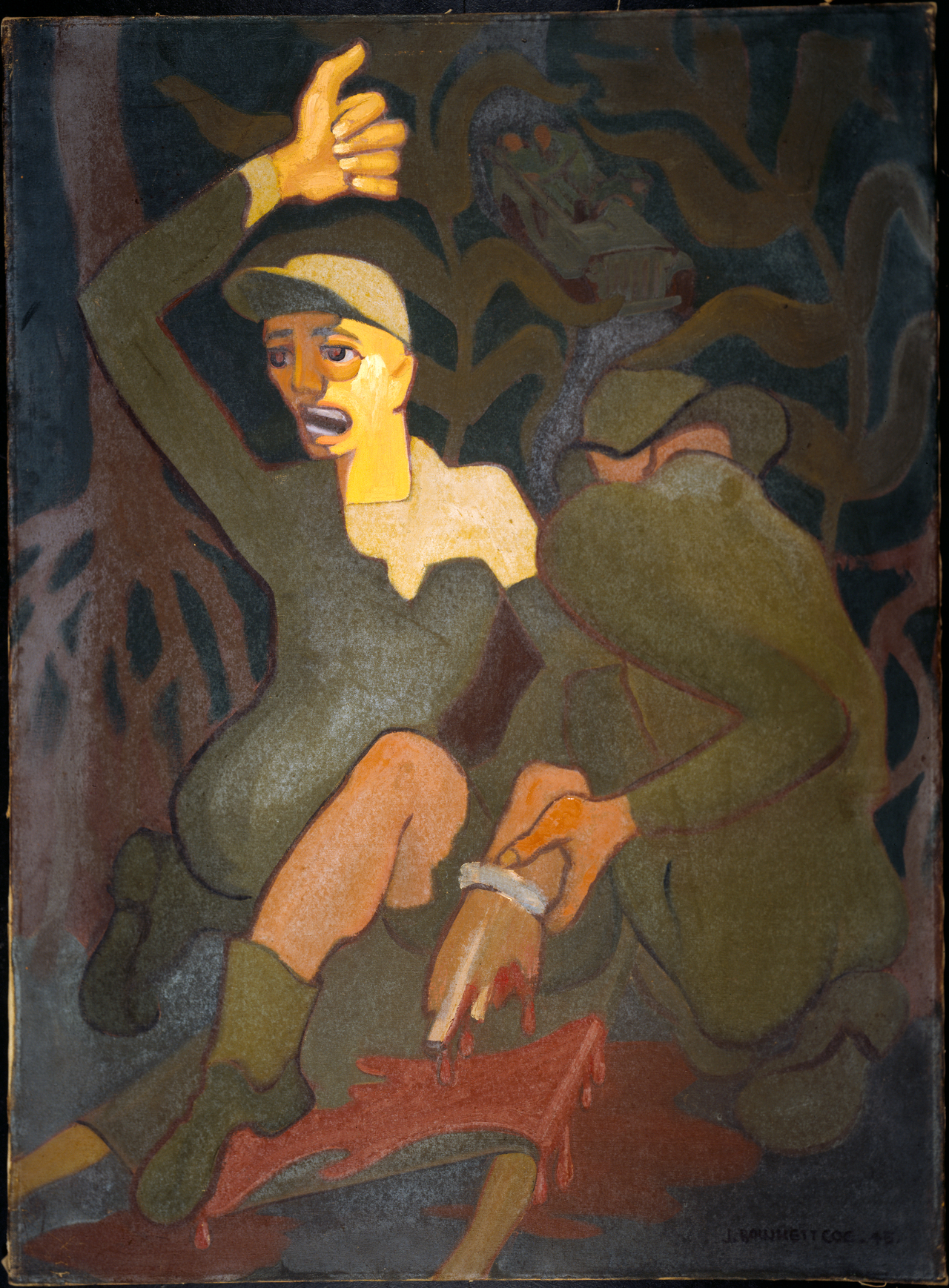
“Stretcher Bearers” (Figure 5), also in the National Archives collection, depicts a soldier on a stretcher who has had his leg blown off. A torniquet has been tied on his leg to staunch the blood flow as the medic raises his arm to call for assistance. Coe’s style is dramatic and expressive. The colours he uses are dark and muddy, contributing to a sense of threat and unreality: his figures are twisted and distorted. He depicts fighting in the jungle as a terrifying, dangerous ordeal. His paintings thus incorporate a strong anti-war subtext, something few other artists dealt with.
What is interesting about these two paintings, made during the war, is that Coe explicitly portrayed the ghastly reality of battle, and particularly the fighting in the Pacific Islands jungle.
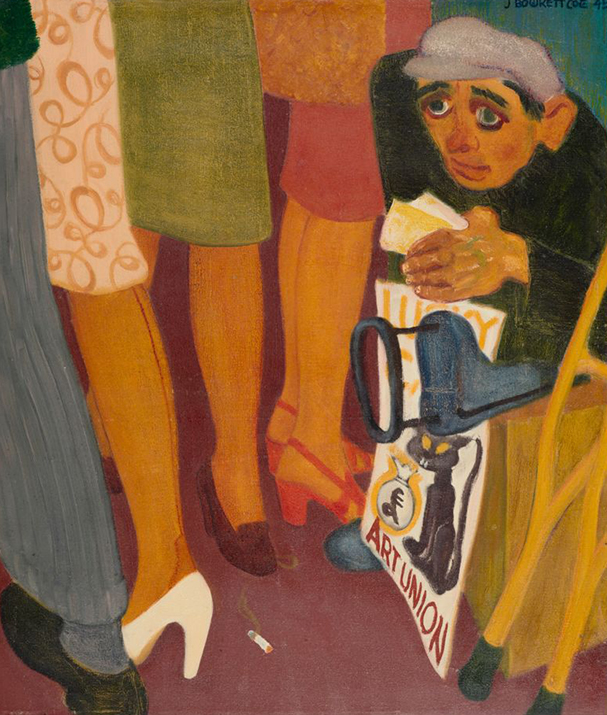
Also in the Te Papa collection is a painting of a Wellington lottery ticket seller (Figure 6), made in 1945, the year the war ended . This painting is made in the same expressive style as the two earlier works shown on the National Archives War Art website, and depicts a man wearing a leg extension device, sitting at a very low level on the pavement surrounded by the legs of passersby. A pair of wooden crutches is propped up next to him. Perhaps this is the victim in Figure 5, struggling to survive with his disability, the forest of mangrove trees now replaced by a forest of anonymous legs?
On his return from the war, Coe continued his career in art education. He was seconded by the Department of Education to help establish an art curriculum for secondary schools in New Zealand.
He was head of the Hutt Valley High School art department from 1945 to 1959. In 1959 he became the art school director at Wellington Technical College and later helped to establish and lead the School of Design at the Wellington Polytech. He became the head of the School of Design in 1962 and taught ergonomics as part of his courses.
In 1983 he acquired a teaching position in ergonomics at the Royal Melbourne Institute of Technology.
Coe died in 2003.