Figure 1
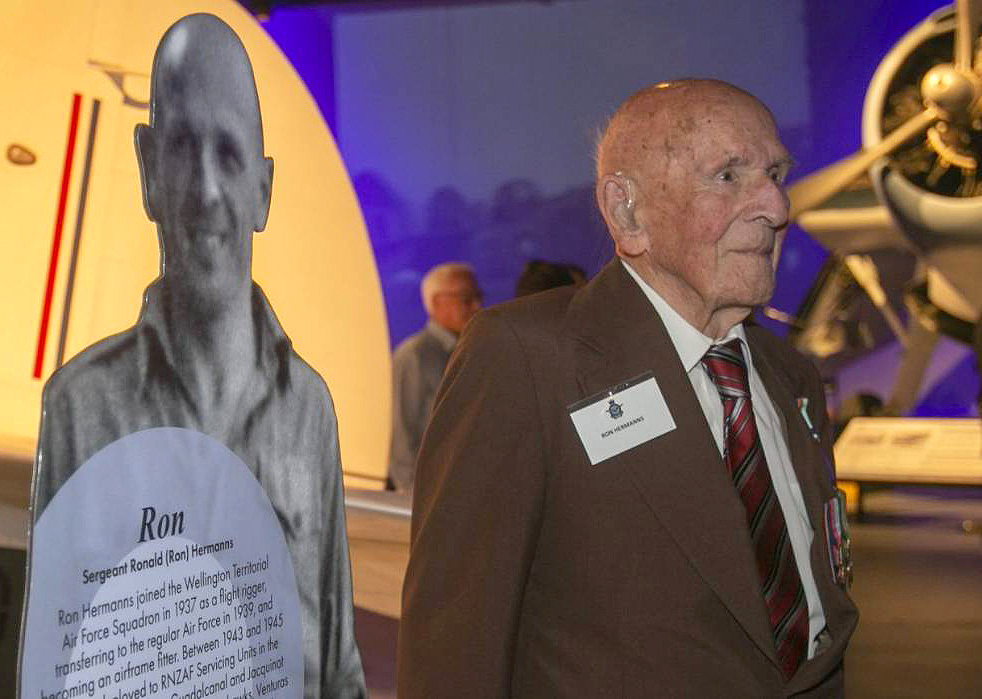
In contrast to the many anonymous soldier artists working in three dimensions whose names are lost to posterity, Ron Hermanns is an example of a serviceman who worked in 3D whose name and background we know. In fact, we know quite a lot about Hermanns, since he is still very much alive, living in Christchurch, and is recognised (in 2019) as New Zealand’s oldest male citizen at 108 years old. He was born to English parents in Winnipeg, Canada and moved to New Zealand at the age of 3. In a Television One interview on 25 September 2019 he said that he attributes his advanced age to never having touched alcohol and remaining single his entire life.
Hermanns was an aircraft engineer, working mainly on P-40 Kittyhawks, and served in the New Hebrides (now Vanuatu) and the Solomon Islands. As such he had access to the precision equipment that enabled him to create the exquisite brooches, pins and other jewellery that is now part of the collection of war art at the New Zealand Airforce Museum in Wigram, Christchurch (Figure 2).
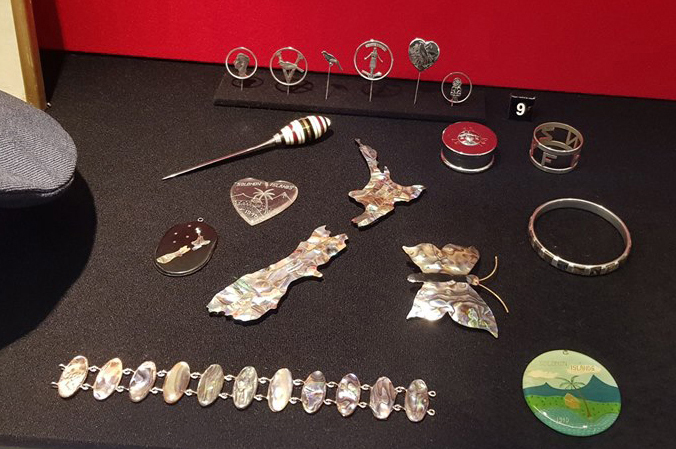
Figure 2
Like so many other servicemen in both World Wars, Hermanns created the almost obligatory letter-knife (Figure 2), embellished with R.N.Z. AIR FORCE and his initials, but it is in no way a letter knife cobbled together from spent bullet cartridges, but a sturdy, functional object made from one piece of metal.
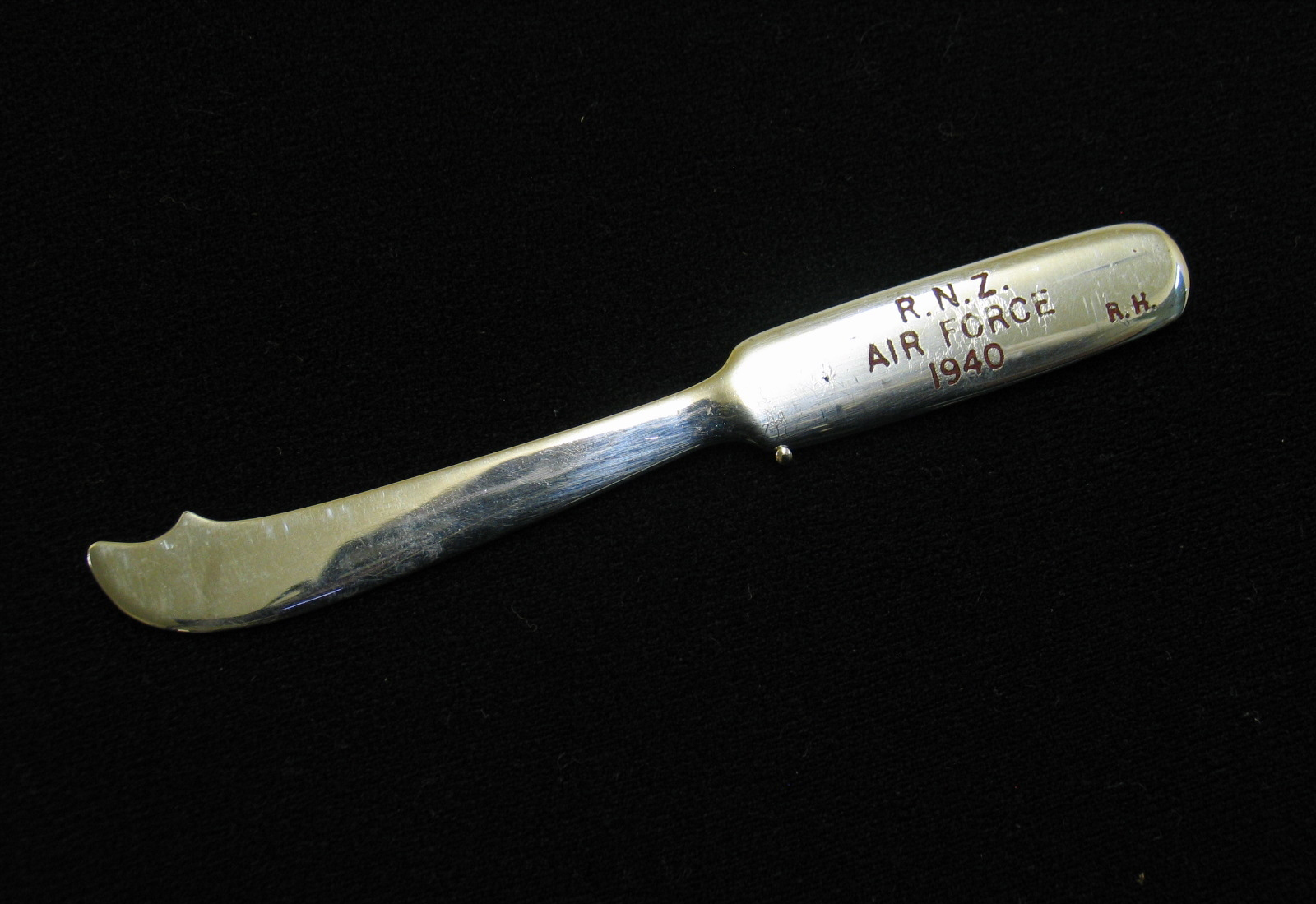
Figure 2
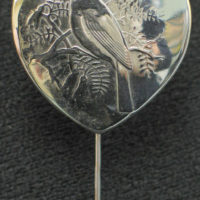
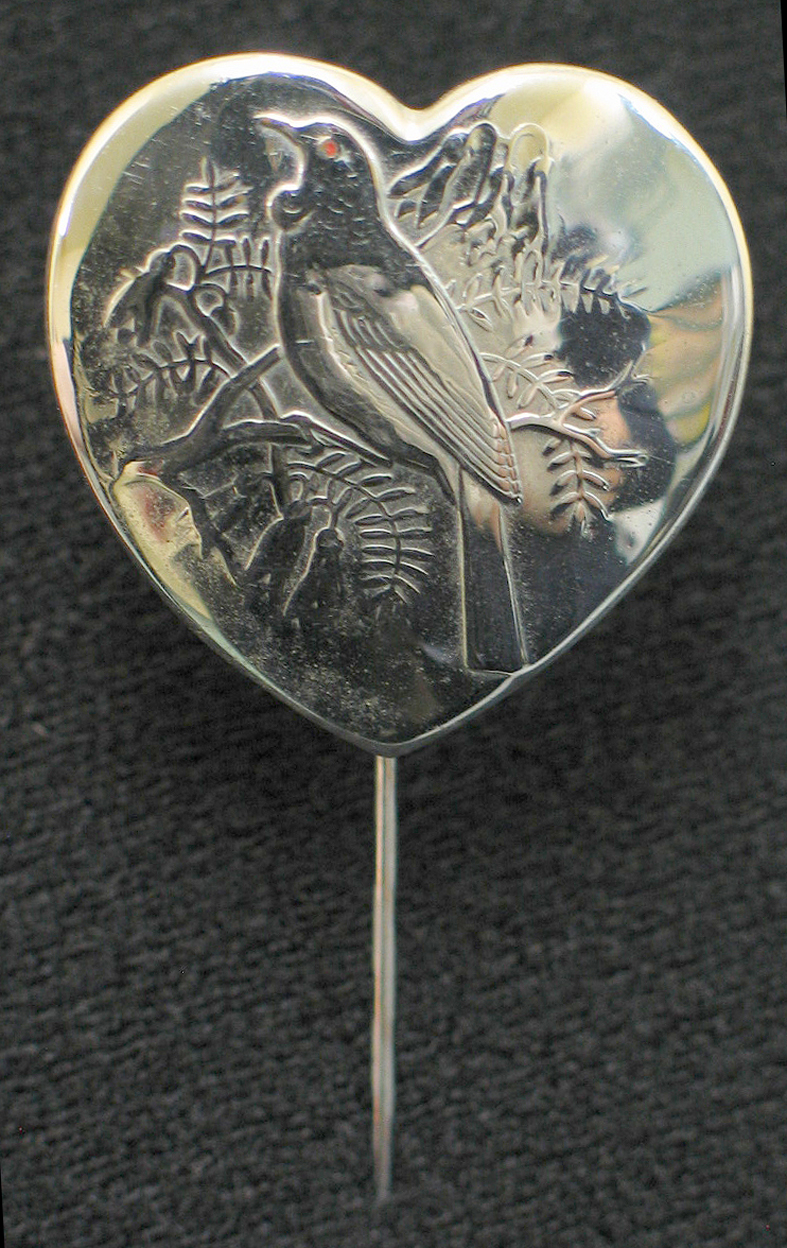
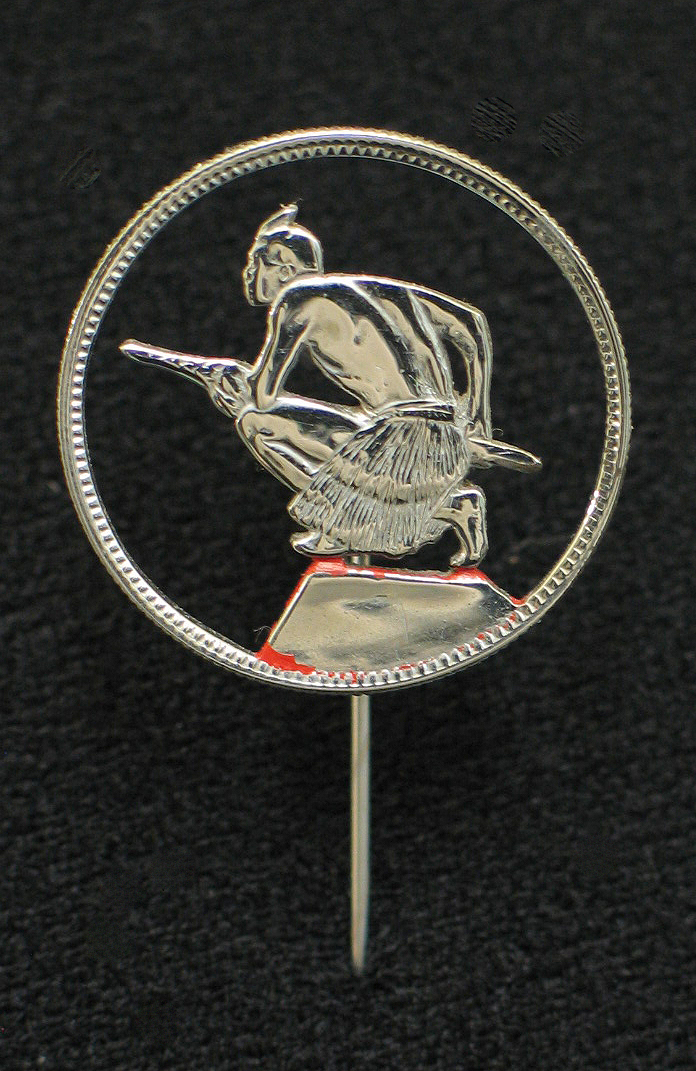
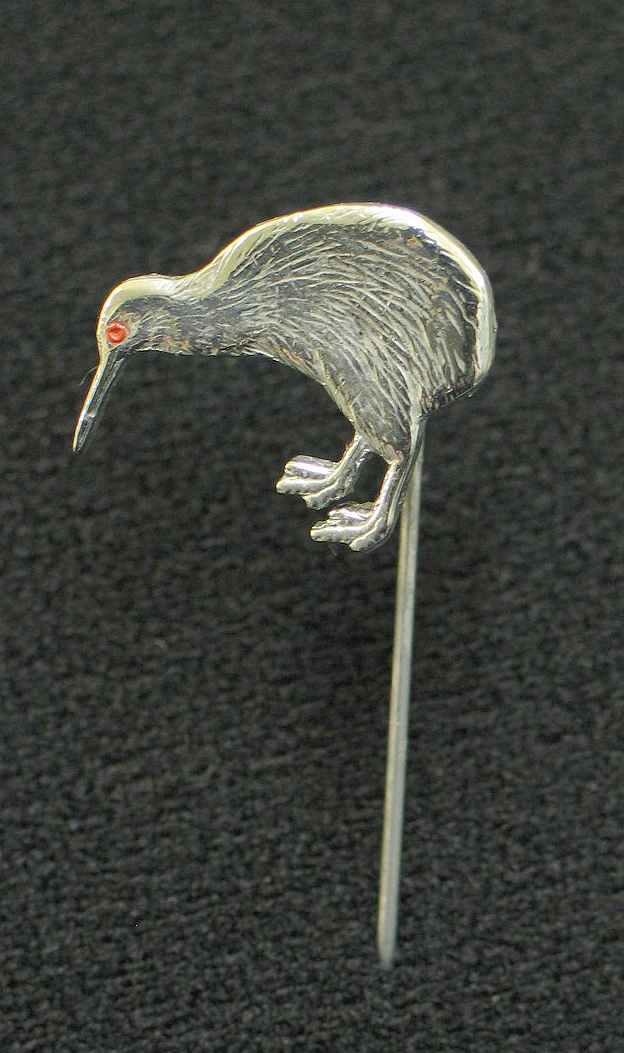
It is his handcrafted jewellery that impresses the most. The delicacy and fineness demonstrated in his jewellery pieces is remarkable, especially when considering the wartime conditions they were created in. The equipment he had available to him as an aircraft engineer was a major factor in the creation of these objects, but one can only wonder at the sharp vision, patience and steady hand required to cut and file details from New Zealand coins to use as the basis for many of his pieces (ironically, Hermanns’ eyesight today is severely impaired along with his hearing). The pins shown in Figures 3 – 5 are made from 1940s New Zealand coins: a sixpence, shilling and florin.
-
- Figure 3
-
- Figure 4
-
- Figure 5
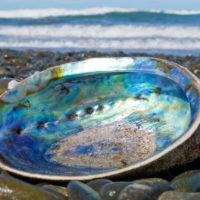
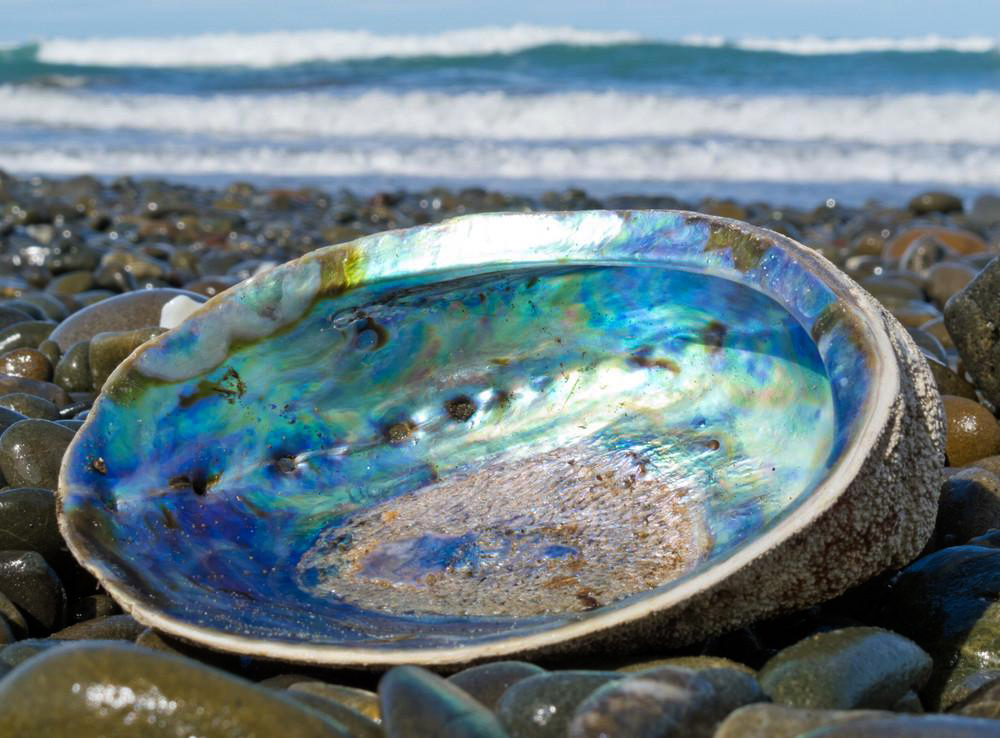
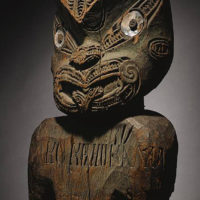
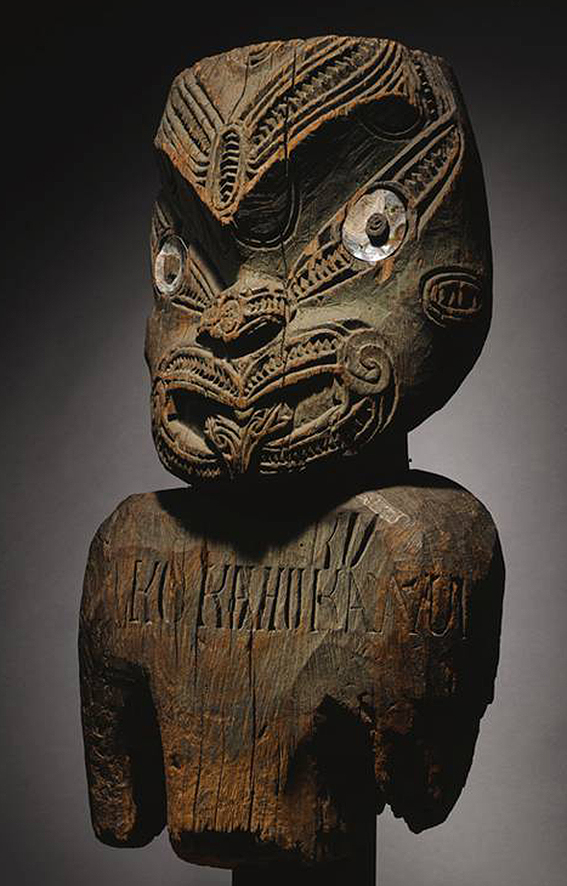
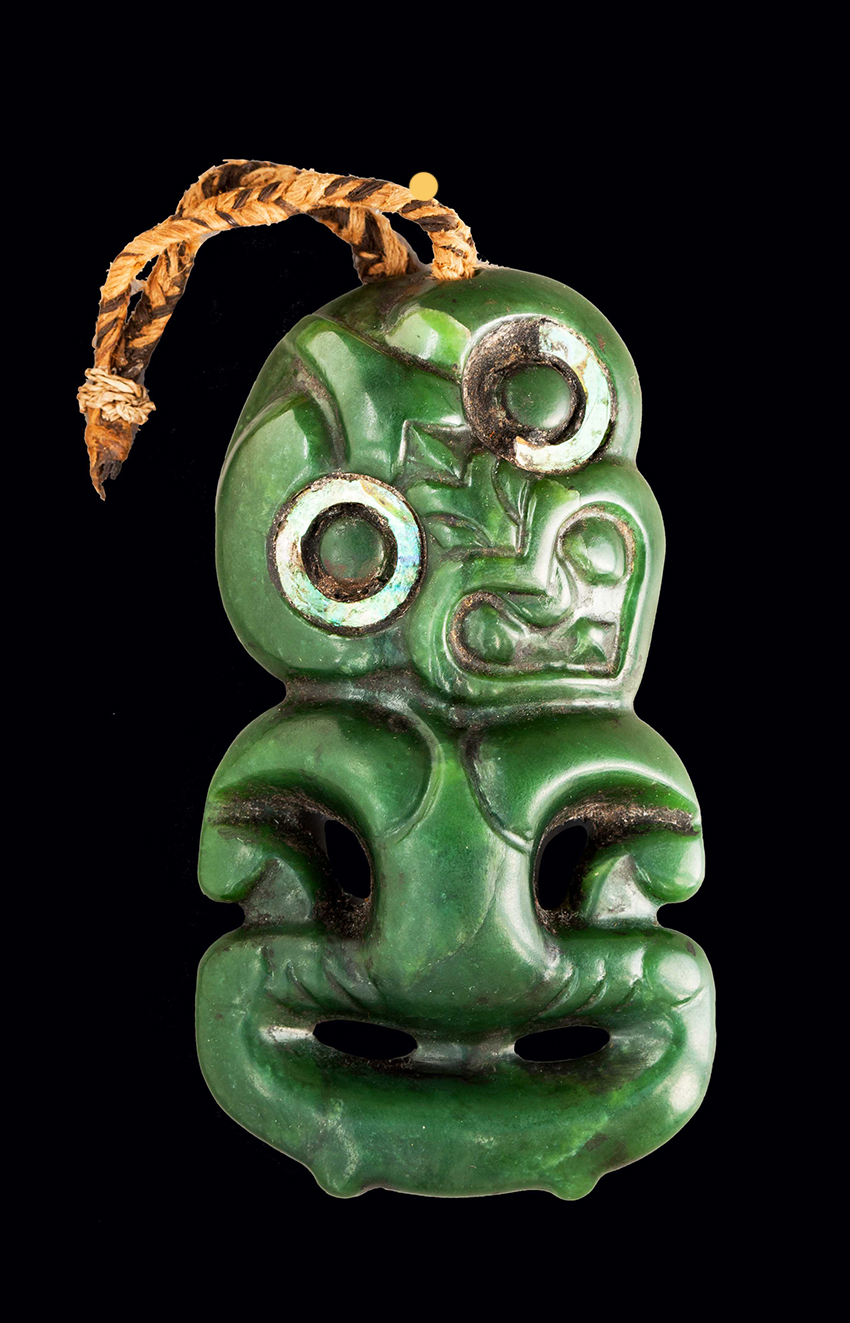
While he was serving in the New Hebrides/Vanuatu, Hermanns collected samples of paua shell, which he took with him when he was transferred to the Solomon Islands. The richly coloured paua shell (Figure 6), similar to the abalone shell, is also found in New Zealand, and was traditionally used by Maori artists in their carvings to highlight the eyes and other important decorative details (Figure 7) on hei-tiki, pou (carved posts) and maihi (carved barge boards on meeting houses).
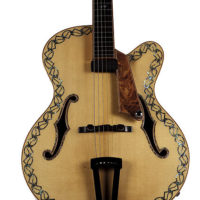
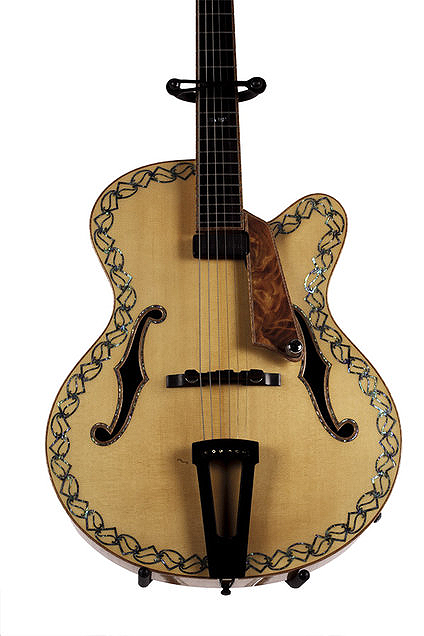
Partly channeling the practice of his Maori forebears, temporary Maori sculptor Michael Parekowhai also uses paua shell in his work, such as inlaid into the body of a set of acoustic guitars in his 1999 installation “Ten Guitars” (Figure 8)
-
- Figure 6
-
- Figure 7
-
- Figure 8
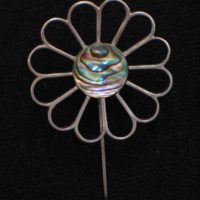
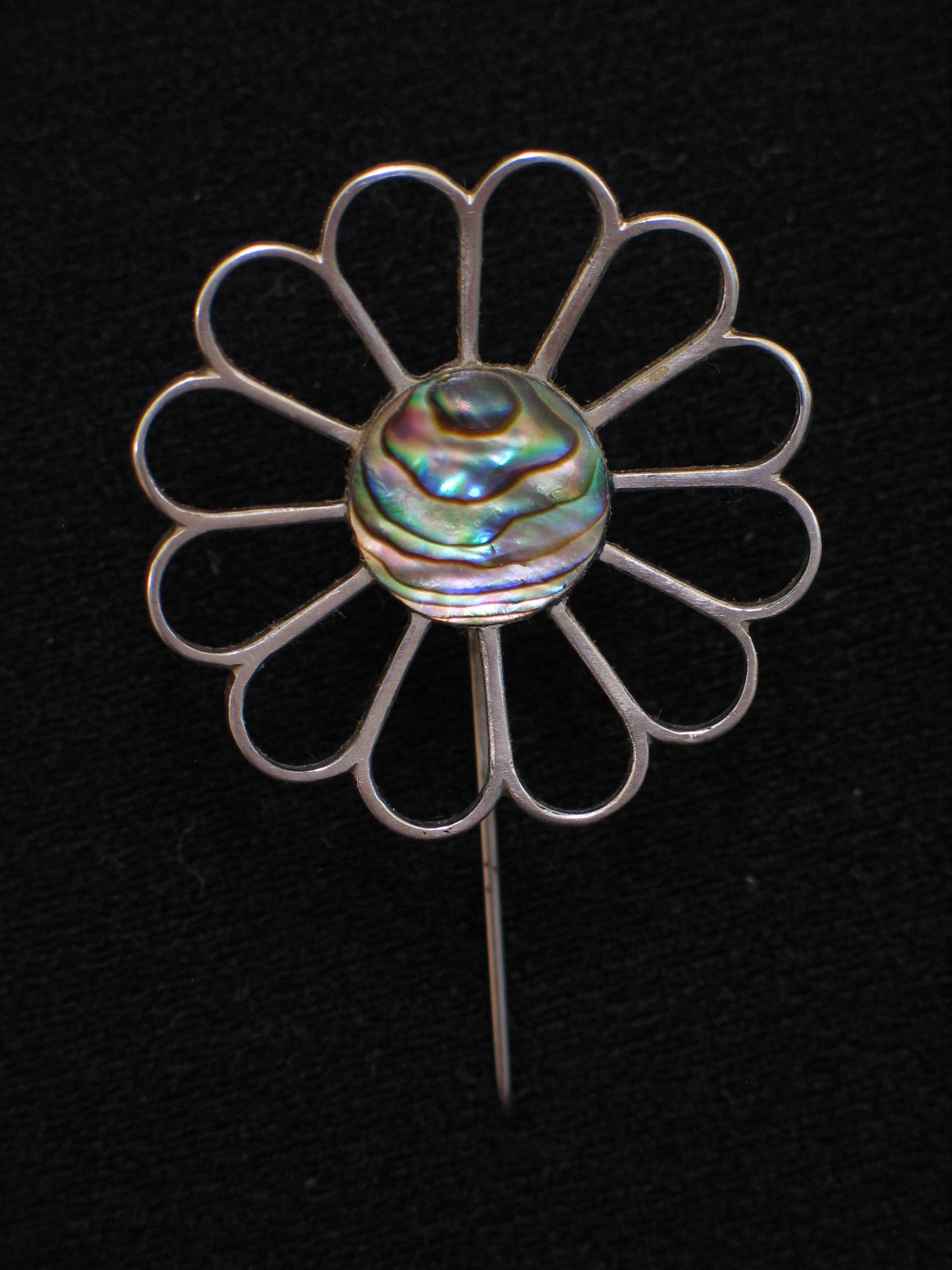
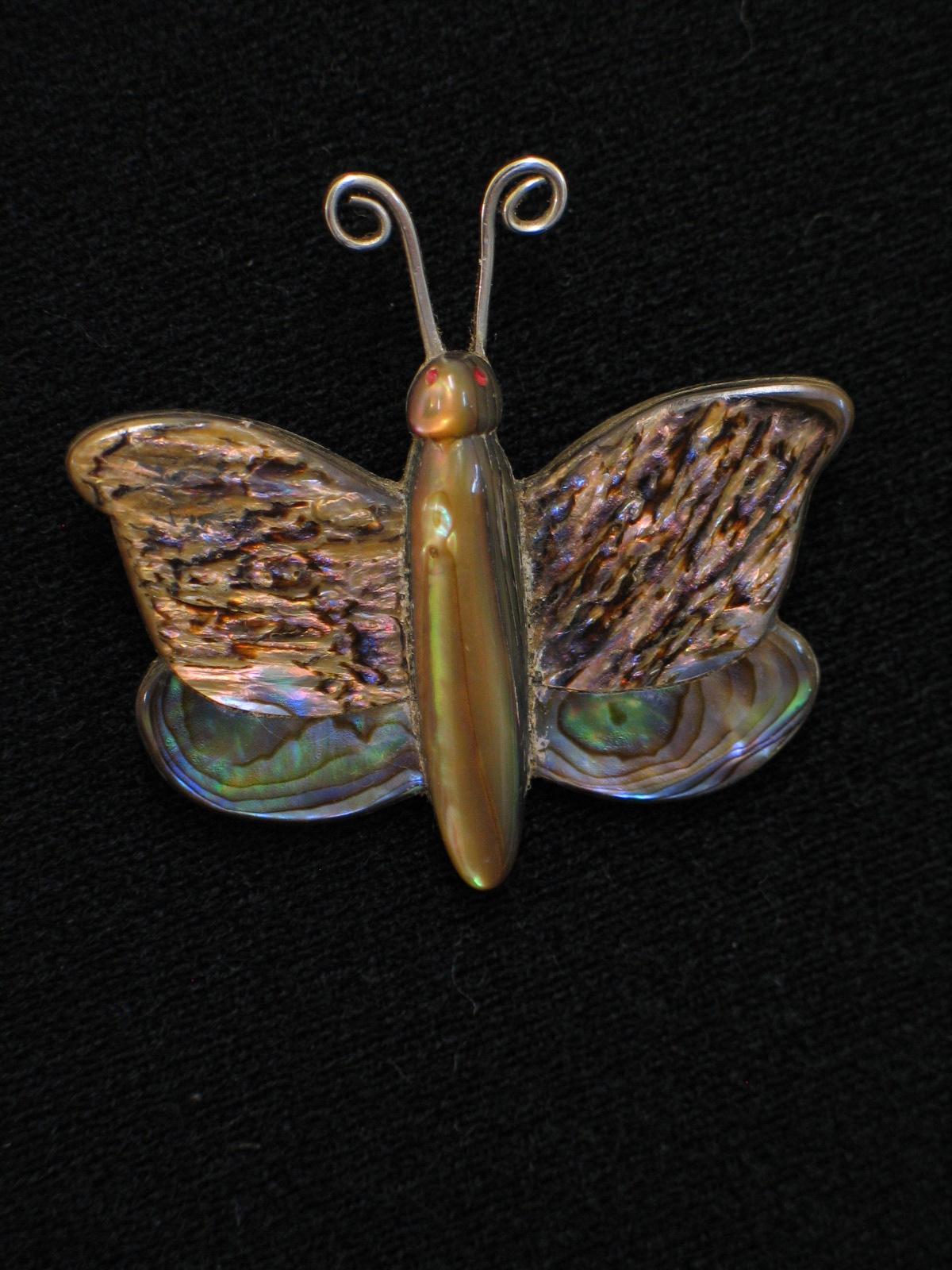
Hermanns integrated this culturally significant material into many of his jewellery pieces. The flower shaped pin in Figure 9 uses a single cut piece of paua shell, the brooch in Figure 10 utilises the interior and exterior paua shell patterns for the two layers of the butterfly wings, while it appears that the body of the butterfly was made from a spent rifle bullet.
-
- Figure 9
-
- Figure 10
-
- Figure 11
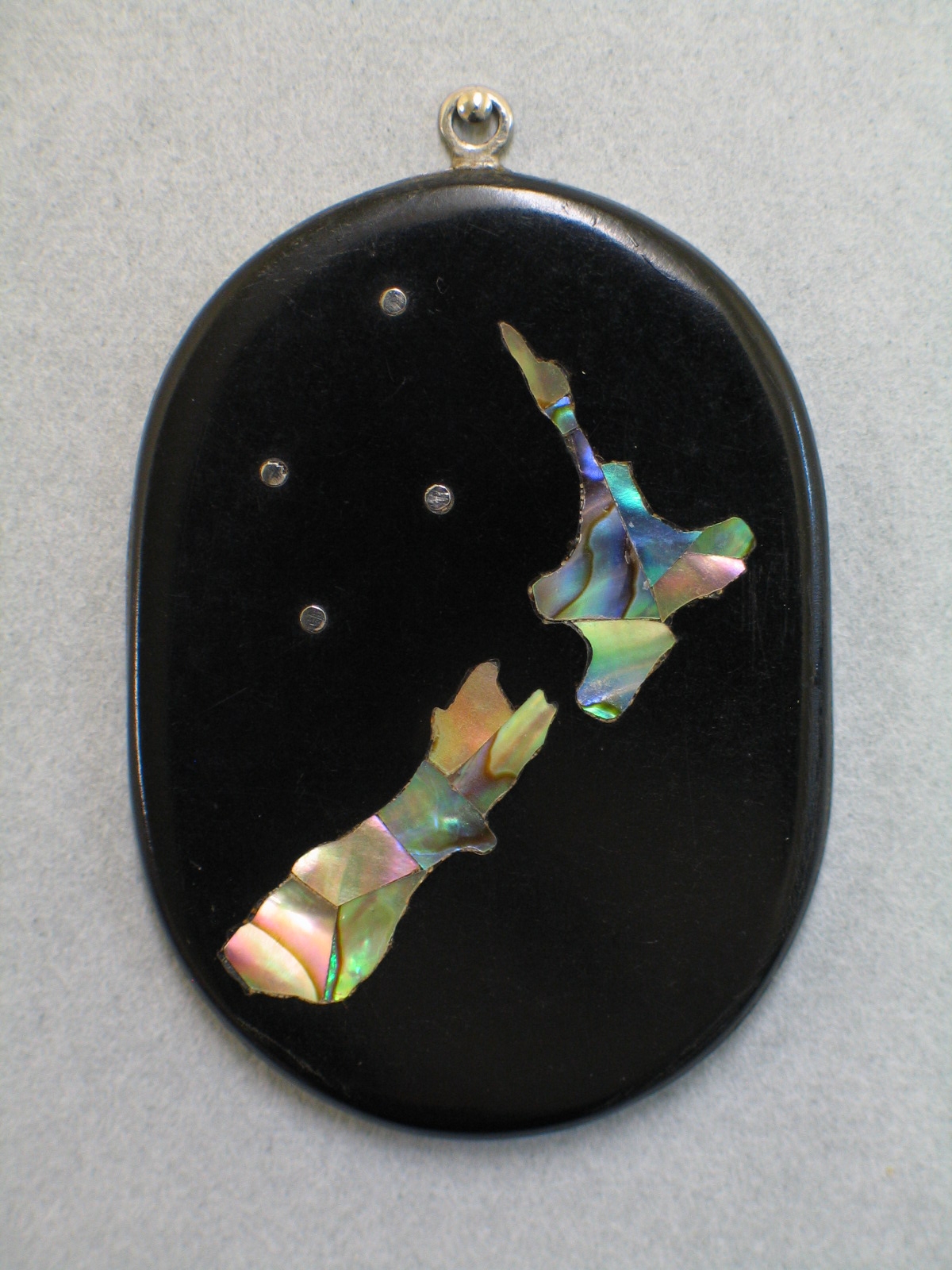
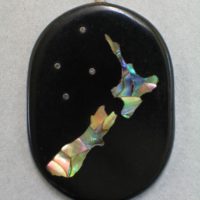
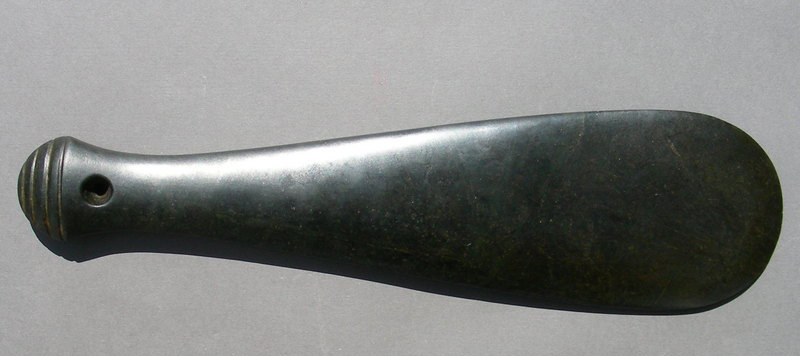
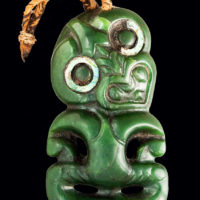
The pendant based on a map of New Zealand (Figure 11) features a mosaic of different shell sections carefully inlaid together. The Southern Cross, visible from New Zealand and incorporated into the New Zealand flag, is represented by four metal points, while the base material, likely bakelite or perspex, is reminiscent of New Zealand greenstone or pounamu, used by Maori to make mere (war clubs) (Figure 12) and hei-tiki pendants (Figure 13).
-
- Figure 12
-
- Figure 13
It is sobering to think that of the thousands of young New Zealand men who went to the War in the Pacific, Ron Hermanns is among the very last to survive. Ten years older than Harry Stone, he was already in his early 30s during his time in the Pacific. He still lives in his own Christchurch home and despite his impaired sight and hearing continues to keep busy in his home workshop.
Figure 14 shows Ron Hermanns cutting his 108th birthday cake during a celebration at the New Zealand Air Force Museum in Wigram, Christchurch.
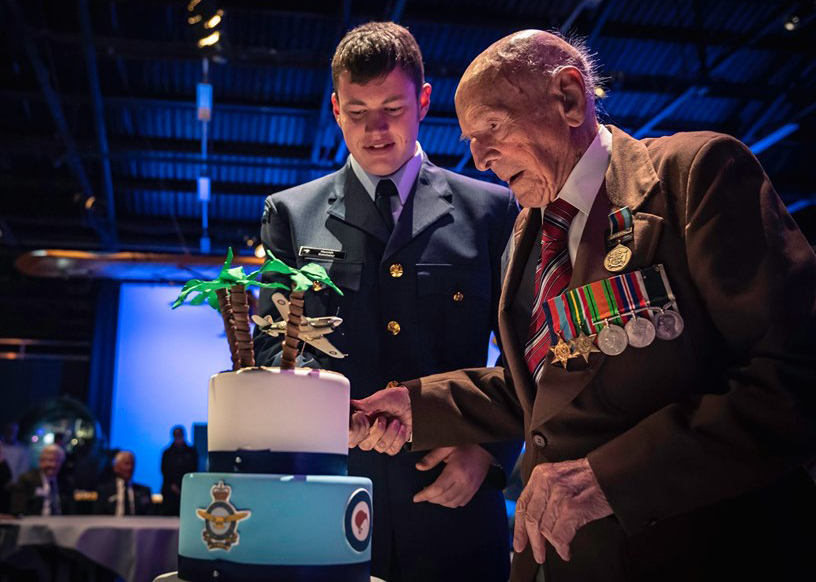
Figure 14